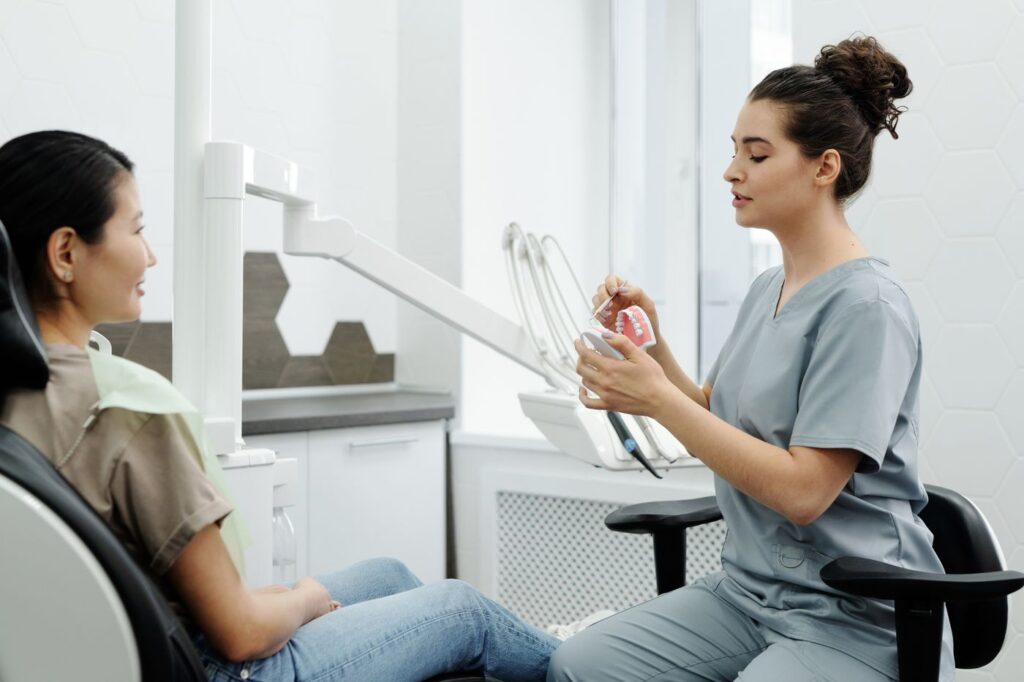
Few things undermine confidence faster than feeling something you were told you would not. If a tooth has refused to go numb before, you are not imagining it.
There are well-documented reasons why some teeth resist anaesthetic, and established techniques for dealing with them. Here is what is actually happening, and what should be done about it.
Key takeaways
- An acutely inflamed pulp is chemically harder to anaesthetise — this is a property of the tooth, not of you.
- Standard lower-jaw blocks succeed in 85–90% of healthy teeth but can drop below 30% in a “hot” tooth.
- Repeating the same failed injection rarely helps; changing technique does.
- Tell us the moment you feel something sharp. That is information, not an interruption.
Why an inflamed tooth resists anaesthetic
Local anaesthetic works by blocking sodium channels in nerve fibres, which stops the pain signal reaching your brain. In a healthy tooth that is straightforward.
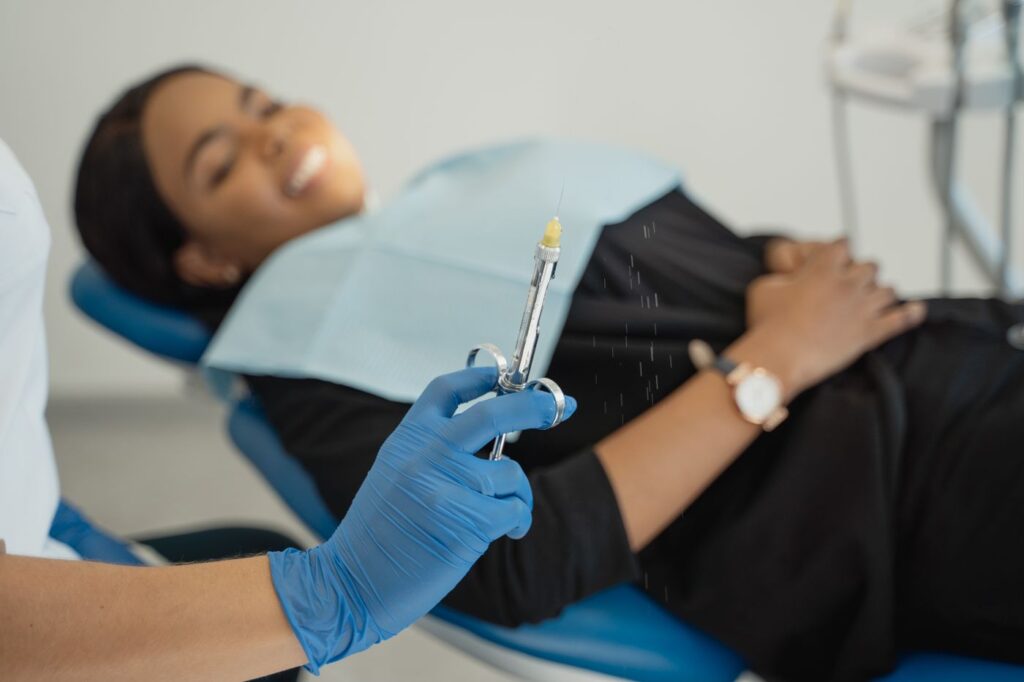
An acutely inflamed pulp is a different environment. The inflamed tissue is more acidic, which reduces how much of the drug crosses into the nerve. The nerve fibres themselves become sensitised and fire at lower thresholds, and inflammation upregulates channel types that ordinary anaesthetic blocks less effectively.
Clinically this is called a “hot” tooth, and the numbers are striking. Standard inferior alveolar nerve blocks achieve profound pulpal anaesthesia in roughly 85–90% of uninflamed teeth. In symptomatic irreversible pulpitis, published success for the same block can fall below 30%.
Why lower back teeth are hardest
If you have had trouble, it was probably a lower molar. Upper teeth are anaesthetised by depositing solution near the root, through relatively porous bone. That is reliable.
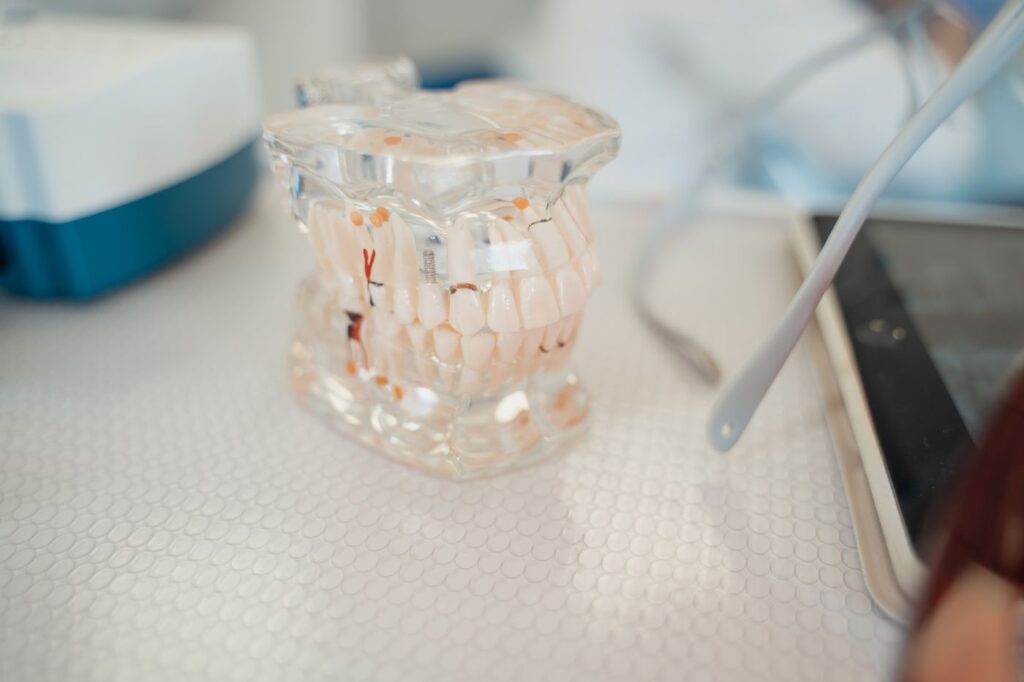
Lower back teeth sit in dense bone anaesthetic will not penetrate, so the nerve must be blocked further back, before it enters the jaw. That target is small and its position varies between people.
| Factor | Effect on anaesthesia |
|---|---|
| Acutely inflamed pulp | Largest single factor — block success can fall below 30% |
| Lower molar | Dense bone; the nerve must be blocked further back |
| Anatomical variation | The nerve is not where the textbook says in a minority of people |
| Accessory innervation | A second nerve supply the main block does not reach |
| Existing infection | Acidic tissue reduces drug uptake |
| Anxiety | Lowers pain threshold; sharpens what is felt |
Swipe the table sideways to see every column.
What should happen when the first injection fails
The wrong response is more of the same. If a standard block has not worked, repeating it usually will not either, and there are safe limits on total dose.
The right response is a different technique. Several are well established and routine in specialist practice:
- Intraosseous injection. Anaesthetic is placed directly into the bone beside the tooth. Onset is 10–20 seconds and it is the most predictable option for a hot tooth.
- Intraligamentary injection. Delivered into the ligament space around the root; reported success of 50–96% as a supplemental technique.
- Intrapulpal injection. Directly into the pulp once accessed — briefly uncomfortable, then immediately effective.
- An alternative block. Gow-Gates and Vazirani-Akinosi techniques target the nerve higher up, bypassing the anatomical variation that defeats the standard approach.
None are exotic. They are routine in a practice treating inflamed pulps daily — part of why “we could not get you numb” is a recognised reason to refer.
What you should do
Speak up immediately. Patients often endure sharp sensations out of politeness. It is not meant to feel like that, and enduring it makes the next appointment harder.
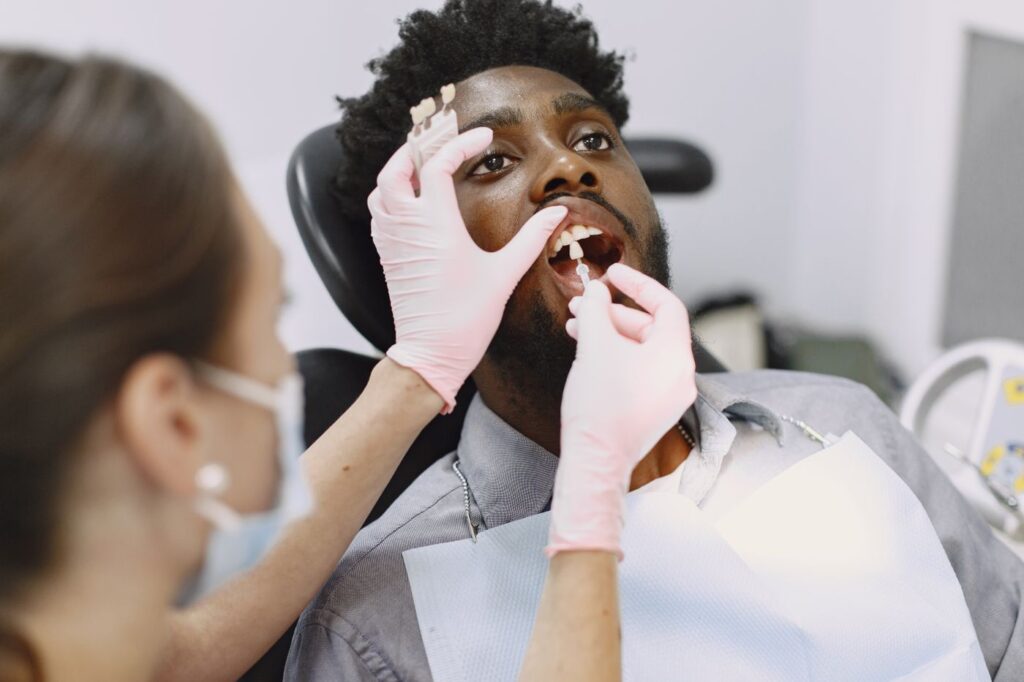
- Tell us at the start if you have had trouble getting numb before. It changes the plan from the first injection rather than the third.
- Agree a stop signal — a raised hand pauses everything immediately.
- Describe what you feel. Pressure and vibration are expected; sharp, hot or electric sensations are not. That distinction tells us a great deal.
- Do not tough it out. There is no prize, and it works against you.
What a supplemental injection feels like
People understandably worry that a second, different injection means something has gone wrong. It does not — it means the first technique met a tooth it was never going to beat.
| Technique | What you feel | How fast it works |
|---|---|---|
| Intraosseous | Brief pressure; sometimes a fast heartbeat for a minute | 10–20 seconds |
| Intraligamentary | Firm pressure beside the tooth | Under a minute |
| Intrapulpal | A few seconds of sharp sensation, then nothing | Immediate |
| Gow-Gates block | Much like a standard block, placed higher | 5–10 minutes |
Swipe the table sideways to see every column.
The brief racing heartbeat some people notice after an intraosseous injection is adrenaline reaching the bloodstream faster. It is harmless and passes within a minute.
Anxiety, and why it is not “just in your head”
Anxiety does not stop anaesthetic working, but it changes how a partially anaesthetised tooth is experienced. A heightened nervous system registers pressure as pain and mild sensation as sharp.

It also creates a loop: a difficult appointment increases anxiety, which makes the next one harder. Breaking that loop is worth doing deliberately — our guide to sedation options covers both the medication and the non-drug approaches, and sedation combined with proper technique handles nearly all of these cases.
Why getting there matters clinically
This is not only about comfort. An inadequately anaesthetised tooth is difficult to treat properly, because the patient cannot stay still and the clinician is working against the clock.

Rushed treatment is how canals get missed, which is a leading route to treatment failing later. Taking the extra ten minutes to achieve profound anaesthesia is part of doing the job well, not a delay to it.
It also argues against waiting. The more acutely inflamed a tooth becomes, the harder it is to numb — so a tooth treated early is easier to make comfortable than the same tooth treated three weeks later. If symptoms are escalating, the emergency guide covers what should not wait.
If a previous appointment went badly, say so when you book — see what a first visit involves. The published trial of management after inferior alveolar nerve block failure covers the clinical evidence behind the techniques above.
Frequently asked questions
Why did the injection work last time but not now?
Because the tooth is different, not you. An acutely inflamed pulp changes chemically and electrically in ways that make it resist local anaesthetic. The same injection in the same jaw on a healthy tooth usually works perfectly.
Does being anxious make it harder to get numb?
Indirectly, yes. Anxiety lowers pain threshold and makes sensations register as sharper, so a partially anaesthetised tooth feels worse than it otherwise would. Managing the anxiety genuinely helps.
Will more anaesthetic eventually work?
Not necessarily — repeating the same injection that has already failed rarely succeeds, and there are safe limits. Changing technique works far better than increasing volume.
Is it true that redheads need more anaesthetic?
There is some published evidence of altered anaesthetic requirements associated with certain genetic variants. It is worth mentioning, but it is a minor factor next to whether the pulp is acutely inflamed.
Have Questions or Ready to Schedule?
Our team is here to help — call, email, or request an appointment online.