
Your dentist says you need a root canal and offers to do it. Should you say yes, or ask to see a specialist? It is a fair question, and the honest answer depends almost entirely on which tooth it is.
Here is what actually differs between the two, what the outcome data shows, and the cases where it genuinely matters.
Key takeaways
- An endodontist is a dentist plus two to three years of residency limited to this procedure.
- Reported success is roughly 90–95% for specialists against 85–90% for general practice — though specialists take the harder cases.
- For a straightforward front tooth, your own dentist is very likely the right choice.
- Molars, retreatments, unclear diagnoses and “we could not get you numb” are specialist territory.
What the training difference actually is
Both are dentists. The difference is what happened afterwards: a residency limited entirely to endodontics, covering diagnosis of orofacial pain, complex canal anatomy, retreatment and surgical endodontics.

Volume is the part patients underestimate. A dentist may graduate having completed a handful of root canals; an endodontist typically finishes residency having done several hundred, and then does little else for the rest of their career.
What the outcome data shows
| Measure | Endodontist | General dentist | Caveat |
|---|---|---|---|
| Reported success rate | ~90–95% | ~85–90% | Specialists treat harder cases, which understates the gap |
| Cases completed in training | Several hundred | Often fewer than ten | Volume compounds over a career |
| Microscope used routinely | Standard | Less common | Missed canals are a leading cause of failure |
| 3D imaging on site | Usual | Varies | Matters most for molars and retreatment |
| Typical fee difference | 10–20% higher | Baseline | Often reimbursed at the same rate |
Swipe the table sideways to see every column.
Read that table carefully in one respect: the success gap is measured across different case mixes. Specialists receive the curved, calcified and previously failed teeth, which drags their average down relative to a like-for-like comparison.
When your own dentist is the right answer
Plenty of root canals are genuinely routine, and there is no advantage in paying more for one. Straightforward cases share a profile: a front tooth or premolar, a single canal visible along its whole length on the radiograph, a clear diagnosis, and no history of difficulty getting numb.

Many general dentists do this work very well and enjoy it. If yours is confident about a case that fits that description, that confidence is usually well founded.
When it is worth seeing a specialist
| Situation | Why it matters |
|---|---|
| Molar, especially a lower first molar | Three to four curved canals; the extra canal is easy to miss |
| Previous root canal on the tooth | Retreatment needs the old filling removed before anything else |
| You could not get numb last time | Hot pulps need supplementary anaesthetic technique |
| Nobody is sure which tooth it is | Referred pain; treating the wrong tooth is the costly error |
| A crack is suspected | Diagnosis relies on magnification and testing, not imaging |
| The tooth is calcified on the radiograph | Canals may be difficult or impossible to locate without a microscope |
Swipe the table sideways to see every column.
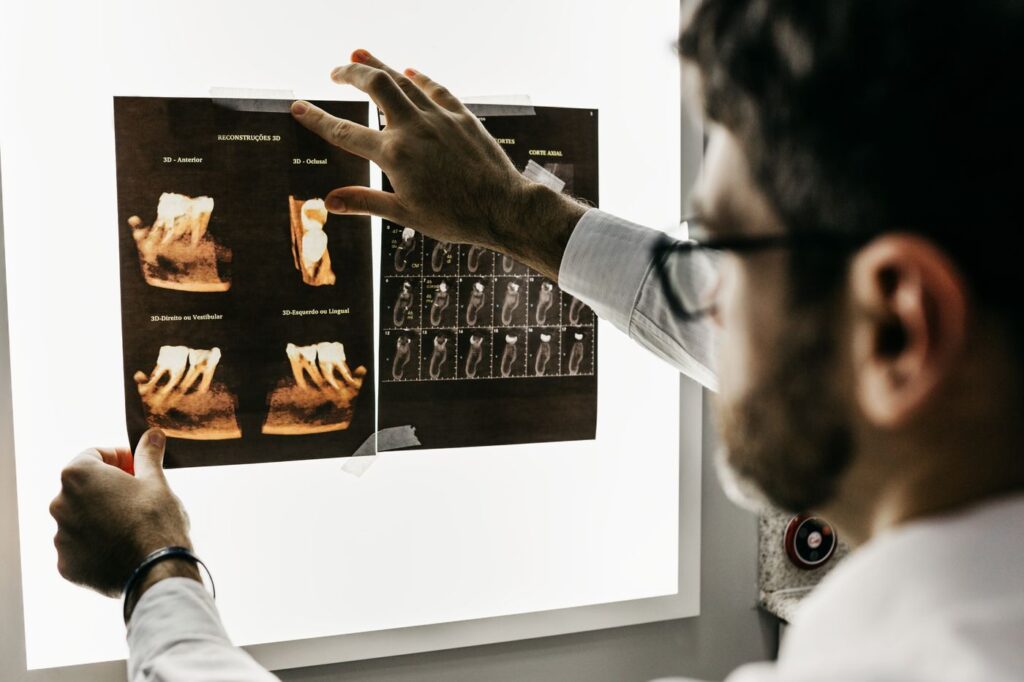
The equipment argument is not marketing. Our page on the technology used here covers it, and why root canals fail explains how often the cause turns out to be anatomy nobody could see.
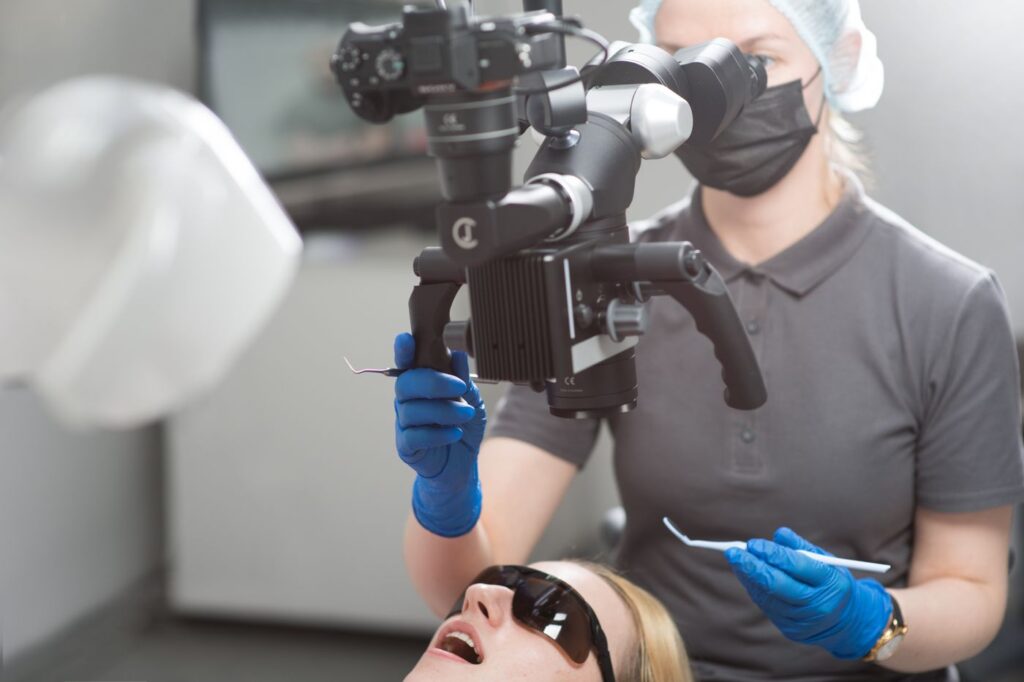
What a specialist practice does differently
The equipment matters less than how routinely it is used. A microscope that comes out for difficult cases is not the same as one used on every tooth from the first minute.
Scheduling differs too. A practice doing only endodontics books the time a molar actually needs rather than fitting it between check-ups, which is why specialist appointments are usually longer and less often split across visits.
Anaesthesia is the third difference, and the one patients notice. Supplementary techniques for teeth that will not go numb — intraosseous and intraligamentary injections among them — are routine in a specialist practice and less commonly needed in general practice.
What it costs, honestly
Expect to pay 10–20% more, commonly $200–$400 extra on a molar. That is a genuine cost and worth weighing.

Two things reduce it. Most insurance plans reimburse endodontic treatment at the same percentage regardless of who provides it, and a case that has to be redone costs far more than the original difference — the full cost breakdown covers both.
What happens to the tooth afterwards
One practical point is worth knowing before you choose, because it surprises people who expect a specialist to handle everything.
We complete the root canal and place a temporary filling. Your own dentist then places the permanent restoration, which on a back tooth means a crown. So seeing a specialist does not replace your dentist — it adds one appointment in the middle of a course of treatment that returns to them.
That split is also why the referral note back matters. You should expect a written report and post-treatment radiographs to reach your dentist, so the restorative work can start without repeating anything.
How to raise it with your dentist
Ask directly and without awkwardness: how many canals does this tooth have, how confident are you about this one, and would you refer it if it were your own tooth? Those are ordinary clinical questions. So is asking someone else — how a second opinion works sets out where to take which question.

Dentists refer routinely, and the good ones welcome being asked. If you would rather come to us first, you can — see what a first visit involves and meet Dr. Long and Dr. O’Neal. For colleagues, our guide to referral criteria covers the same ground clinically.
The American Association of Endodontists sets out its own account of why and when it is worth seeing an endodontist, which is worth reading alongside this page rather than instead of it.
Frequently asked questions
Is an endodontist a real dentist?
Yes. An endodontist completes dental school first, then two to three further years of specialty residency limited to endodontics. It is the same qualification plus a specialty on top, not a different profession.
Does it cost more to see a specialist?
Usually 10–20% more per procedure — often $200–$400 on a molar. Most plans reimburse specialist and general fees at the same rate, so the out-of-pocket difference is frequently smaller than the fee difference suggests.
Do I need a referral?
Not with us. Many patients arrive by referral from their general dentist, but you can book directly. Either way we send a treatment report back to your dentist so the restorative work can follow.
Will my dentist be offended if I ask to be referred?
No, and it is a reasonable question to ask. Referring is a normal part of practice, and most dentists refer the cases they judge to be outside their comfortable range as a matter of routine.
Have Questions or Ready to Schedule?
Our team is here to help — call, email, or request an appointment online.