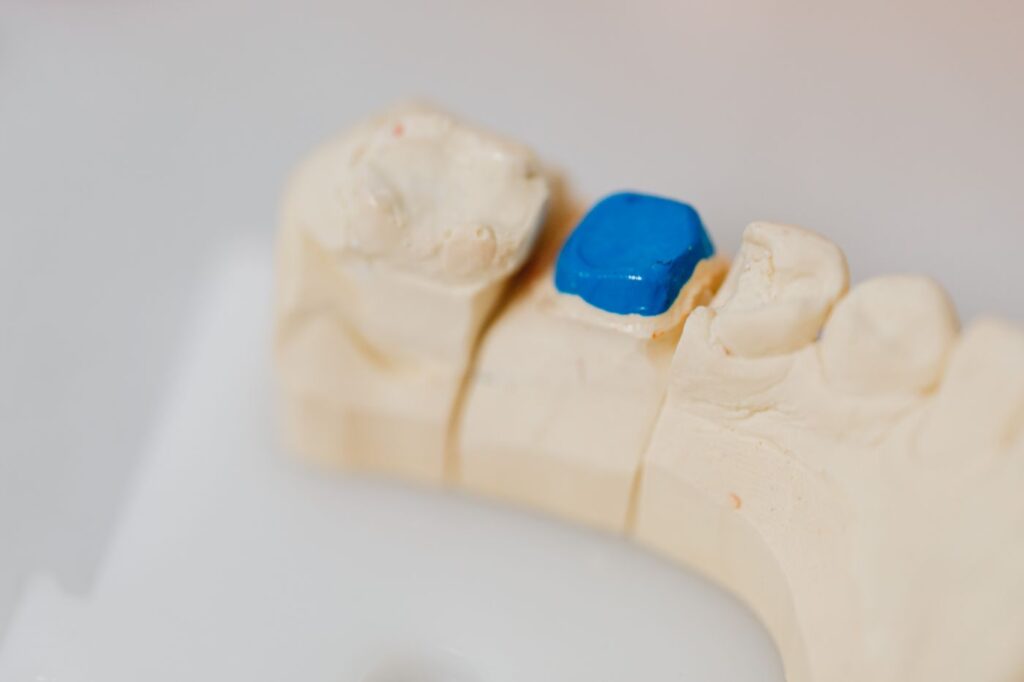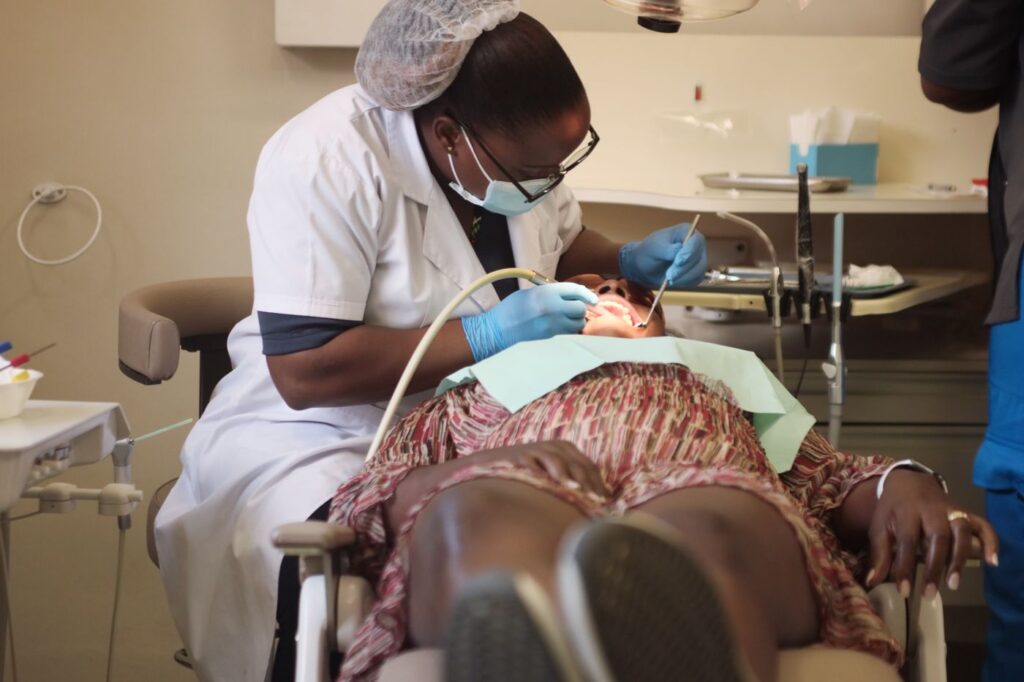
Between the appointment where a root canal is started and the one where the permanent restoration goes on, a small grey or white plug of material is the only thing protecting the work underneath. It deserves more attention than it usually gets.
Here is what a temporary filling is actually doing, how to look after it, and what to do when it comes out.
Key takeaways
- The temporary seals cleaned canals against saliva — that seal is what makes the treatment last.
- They are designed for weeks, not months.
- A lost temporary is a same-week phone call, not an emergency, but do not leave it.
- Chew on the other side and avoid hard or sticky food until the permanent restoration is fitted.
What it is actually doing
Reaching the canals means cutting an opening through the biting surface. That opening has to be closed between visits, and the closure has two jobs.
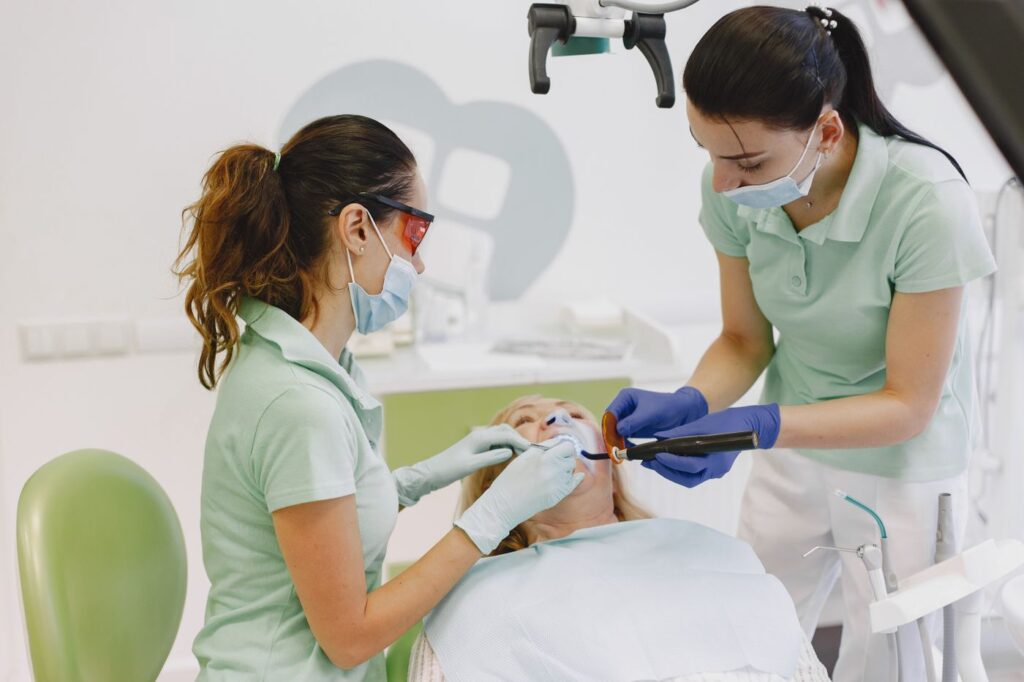
The first is sealing. Saliva carries bacteria, and canals that have been cleaned and disinfected are recontaminated within days if saliva reaches them. That single fact is why the temporary matters — leakage under a temporary is a recognised route to treatment failing later.
The second is being removable. A permanent material would have to be drilled out, removing more tooth structure each time. Temporary materials seal well and come away cleanly, which is exactly the trade-off you want mid-treatment.
Why treatment sometimes takes two visits
Most root canals are completed in one appointment. Where they are not, it is usually deliberate rather than a shortfall of time — our guide to what happens during treatment covers the sequence.

Where there is significant infection, an antimicrobial dressing is placed in the canal and left to work for a week or two. Sealing an actively discharging canal traps the problem inside, so waiting is the safer choice. The temporary holds that dressing in place.
Looking after it
| Do | Do not |
|---|---|
| Chew on the opposite side | Test it by biting on that tooth |
| Brush normally, gently over the tooth | Skip brushing the area because it feels fragile |
| Floss, pulling the strand out sideways | Snap floss up out of the contact — it lifts temporaries |
| Eat soft food for the first day | Eat nuts, ice, crusty bread, toffee or gum |
| Expect mild tenderness for a few days | Ignore pain that is increasing after day three |
| Keep the next appointment | Let it run for months because the tooth feels fine |
Swipe the table sideways to see every column.
Flossing is the one people get wrong. Do floss — leaving the area unclean causes its own problems — but pull the strand out sideways rather than snapping it up through the contact, which can lift the temporary out with it.
If it comes out
- Call the practice. Same day if possible, next working day otherwise. Replacing it takes five to ten minutes and usually needs no injection.
- Rinse gently with warm salt water — about half a teaspoon in a glass — to clear debris.
- Keep chewing away from it entirely until it is resealed.
- Brush around it carefully rather than avoiding the area.
- Do not poke at the opening with anything, and do not try to clean inside it.

If you genuinely cannot be seen for several days, an over-the-counter temporary repair material can bridge the gap. Use it as a short-term measure only, and tell us you have used it — it changes what we find when we reopen the tooth.
What is normal between visits, and what is not
Mild tenderness, particularly when biting on that side, is expected and normal. The ligament around the root has been inflamed both by the original problem and by the treatment itself, and it settles over several days — our recovery guide covers the timeline in detail.
What is not normal: pain increasing after the third day, facial swelling, fever, or a bad taste appearing from the tooth. Those warrant a call rather than waiting for the scheduled appointment — see which symptoms need same-day care.
A tooth that feels completely normal is also not a reason to skip the next visit. Comfort returns long before the tooth is finished, and that gap is precisely when people drift.
How long you actually have
Temporary materials are not all the same, and the timescale depends on what was placed and where.
| Situation | Designed to last | Risk if left longer |
|---|---|---|
| Soft temporary between two treatment visits | 1–3 weeks | Wears through; dressing leaks out |
| Firmer temporary after treatment is completed | Several weeks | Marginal leakage into the canals |
| Temporary crown on a prepared tooth | Weeks | Debonds; the tooth can drift |
| Any temporary on a back tooth | Weeks | Cusp fracture under chewing load |
| Any temporary, months on | Not designed for it | Retreatment, or loss of the tooth |
Swipe the table sideways to see every column.
The bottom row is not scaremongering. Teeth that are treated and then never permanently restored are a recognisable category in every endodontic practice, and they usually arrive back with either a fractured cusp or a reinfected canal.
The deadline nobody mentions
This is the part worth taking away. A temporary filling is a component with a service life measured in weeks.

Left for months it wears down under chewing and begins to leak, and bacteria re-enter canals that were cleaned at some expense. The tooth then needs retreating — not because the root canal was poor, but because the seal above it failed.
On a back tooth the permanent restoration also means a crown rather than a filling, and outcomes are measurably better when it follows within about sixty days. Book that appointment before you leave, not once something starts bothering you again. A long trip is exactly when a temporary gives way, which is why it features in planning for dental problems abroad. The ADA’s overview of root canal treatment covers the wider sequence.
Frequently asked questions
My temporary filling came out. Is it an emergency?
Not an emergency, but not something to leave either. Call the same day or the next working day. The canal underneath has been cleaned and needs to stay sealed, and an open access cavity lets saliva and bacteria straight back in.
Can I use a drugstore temporary filling kit?
As a short bridge if you genuinely cannot be seen quickly, yes, following the packet. If you can be seen within a day or two it is better to leave it alone — material packed into an access cavity can be awkward to remove cleanly.
How long is a temporary filling meant to last?
Weeks, not months. They are designed to seal reliably between appointments and then be removed easily. Left for months they wear, leak, and undo the work underneath.
Can I eat normally with one?
Chew on the other side. Hard and sticky foods are the two that dislodge temporaries — nuts, ice, crusty bread, toffee and chewing gum are the usual culprits.
Have Questions or Ready to Schedule?
Our team is here to help — call, email, or request an appointment online.