Endodontic treatment in children is not simply the adult procedure scaled down. Their teeth are still developing, and the treatment has to work with that rather than against it.
Here is what changes with a child’s tooth, why we often treat baby teeth people expect us to pull, and how an unfinished root is handled.
Key takeaways
- Baby teeth hold space for the adult teeth behind them — losing one early causes crowding.
- A pulpotomy treats only the pulp in the crown and leaves the roots alone.
- An immature permanent tooth has an open root tip that cannot be sealed conventionally.
- A knocked-out baby tooth should never be replanted.
Why baby teeth are worth treating
The instinct to pull a decayed baby tooth is understandable and usually wrong. Primary molars stay in place until around age eleven or twelve, and they are holding the space the permanent premolar will need.
Remove one early and the adjacent teeth drift into the gap. The permanent tooth then erupts crowded, rotated, or not at all — converting a treatable tooth into years of orthodontics.
Pulpotomy: the usual treatment for a baby tooth
Where decay has reached the pulp of a primary tooth but the roots are still healthy, a pulpotomy removes the inflamed tissue in the crown, places a medicated dressing over what remains, and seals it — usually with a stainless steel crown.
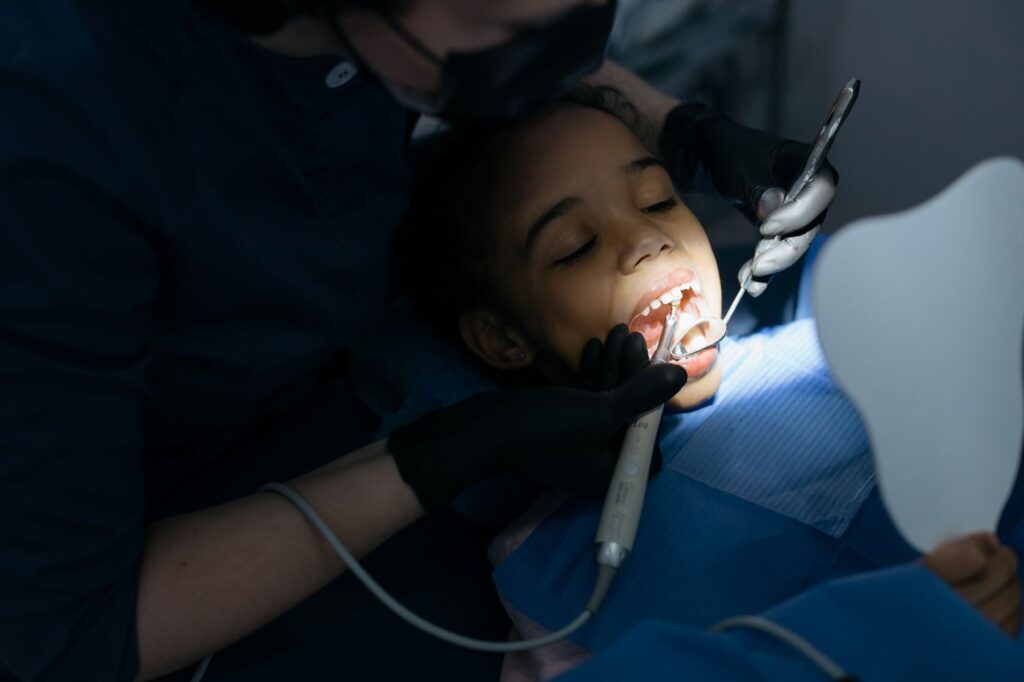
It is quicker and less invasive than full root canal treatment, and it leaves the root portion of the pulp intact so the tooth resorbs and exfoliates naturally when the time comes.
| Situation | Usual treatment | What it preserves |
|---|---|---|
| Deep decay, pulp not yet exposed | Indirect pulp cap | The whole pulp |
| Small pulp exposure, healthy pulp | Direct pulp cap or partial pulpotomy | Most of the pulp |
| Inflamed crown pulp, healthy roots | Pulpotomy plus crown | Root pulp; natural exfoliation |
| Whole pulp necrotic, primary tooth | Pulpectomy with resorbable filling | The tooth and its space |
| Tooth unrestorable | Extraction plus space maintainer | The space, not the tooth |
Swipe the table sideways to see every column.
When the root has not finished forming
Permanent teeth erupt before their roots are complete. It takes two to three more years for the tip to close, and during that window a tooth is genuinely awkward to treat.
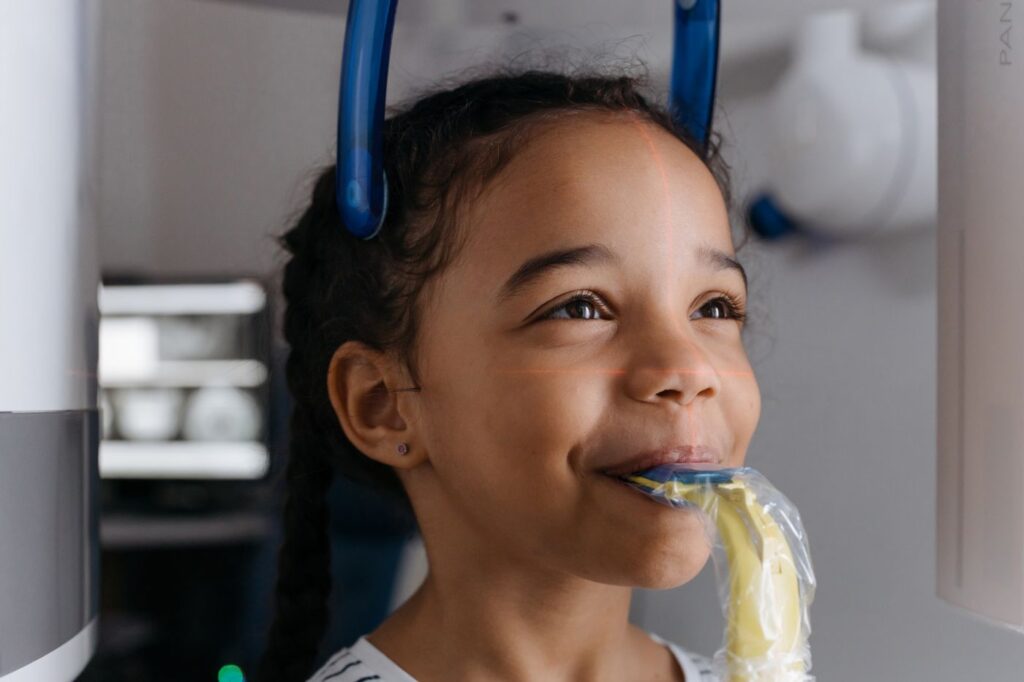
The problem is mechanical: there is no narrowing at the root tip to fill against, so conventional sealing is not possible. Thin root walls also make the tooth prone to fracture.
| Approach | When it is used | What it achieves |
|---|---|---|
| Apexogenesis | Pulp still vital | Root keeps developing normally |
| Pulpotomy | Inflamed but vital pulp | Around 86% success in immature teeth |
| Regenerative endodontics | Necrotic pulp, open apex | Best reported root maturation of the three |
| Apexification | Necrotic pulp, regeneration unsuitable | Builds a barrier so the canal can be sealed |
Swipe the table sideways to see every column.

Where the pulp is still alive, keeping it alive is always the goal — a vital pulp continues to lay down dentine and thicken the root walls, which no artificial material replicates.
Why children’s teeth behave differently
Two features of a young tooth change the clinical picture entirely, and both work in the child’s favour.
The pulp chamber is proportionally much larger, which means decay reaches it sooner but also that the pulp has a far richer blood supply and a genuine capacity to heal. Treatments that would be optimistic in an adult are realistic in a child.
The roots are also still forming, or in the case of baby teeth already resorbing on a schedule. Treatment has to account for where that tooth is in its life cycle rather than treating it as a small adult tooth.
Trauma is the commonest reason we see children
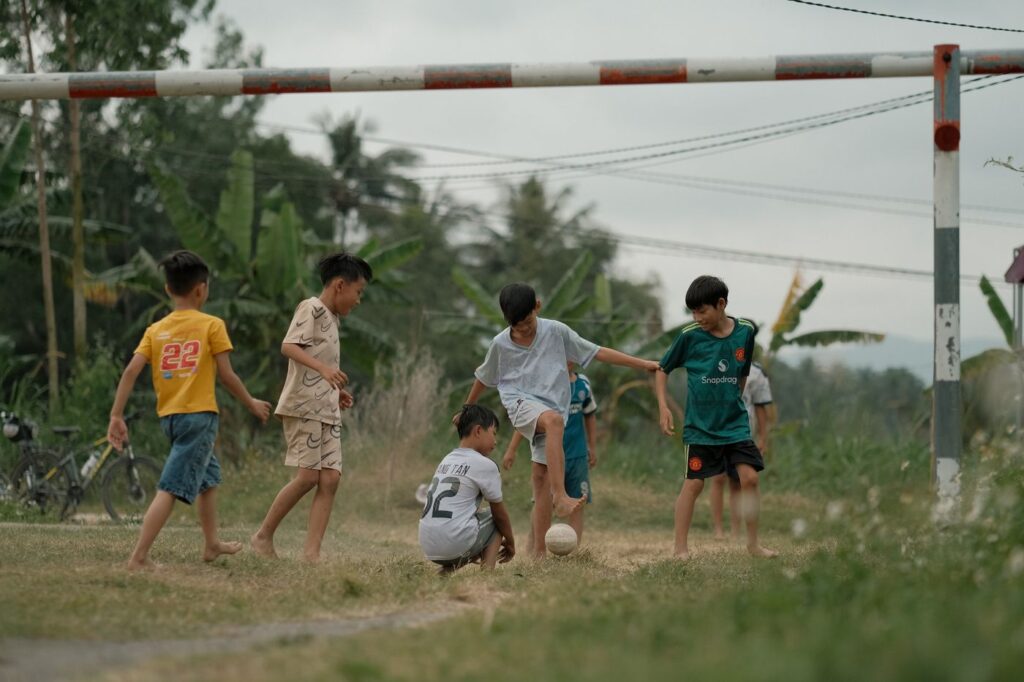
Sport, playgrounds and bicycles account for most childhood dental injuries, and upper front teeth take the brunt. Those teeth are often the ones with immature roots, which is why children’s trauma frequently lands with an endodontist.
If a permanent tooth is knocked out, the first thirty minutes matter enormously — our avulsed tooth guide covers the protocol. For displaced or chipped teeth, see what to do after an impact. Baby teeth are the exception: never replant one.
A mouthguard prevents most of these injuries, and our tips for protecting natural teeth cover choosing one.
What to watch for at home
Children under-report dental pain, and they adapt to it. A child who has quietly stopped using one side to chew is telling you something even if they say nothing hurts.
Worth an appointment: a tooth that has changed colour after a knock, a persistent pimple on the gum, swelling of the face or gum, waking at night, or avoiding cold food. Any of those in a child means the same as in an adult.
After any facial impact, keep watching for months rather than days. A front tooth that darkens six months after a playground fall is the commonest late presentation we see, and the accident is usually long forgotten by then.
What the appointment is like
A parent or guardian accompanies every patient under 18, and stays through the consultation. We explain what we are doing in terms the child can follow, because surprise is what frightens children rather than the procedure itself.

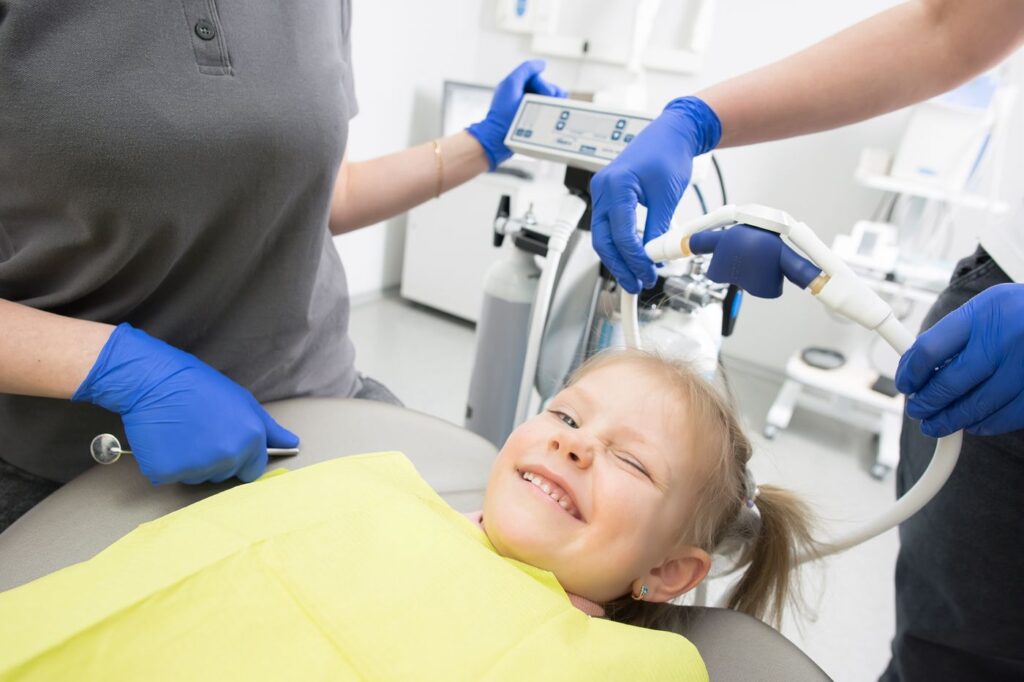
Where anxiety is significant, nitrous oxide works well for children and wears off within minutes. Our guide to managing dental anxiety covers the wider options. The pulp-preserving approach used in children is now used selectively in adults too — see vital pulp therapy in mature teeth.

If your child has toothache, a discoloured front tooth after a knock, or an injury you are unsure about, it is worth an assessment — contact the practice. The American Academy of Pediatric Dentistry publishes its clinical guideline on pulp therapy for primary and immature permanent teeth.
Frequently asked questions
Why treat a baby tooth that is going to fall out anyway?
Because it is holding space. A primary molar lost early lets the teeth behind it drift forward, and the permanent tooth underneath then has nowhere to erupt. That is an orthodontic problem created to avoid a filling.
Is a pulpotomy the same as a root canal?
No. A pulpotomy removes only the inflamed pulp in the crown and leaves the healthy pulp in the roots. A root canal removes all of it. On children’s teeth the partial approach is usually enough and far less invasive.
What happens if a child knocks out a baby tooth?
Do not put it back. Replanting a primary tooth can damage the permanent tooth developing above it. See a dentist to check nothing else is injured, but leave the tooth out.
Can a child have a root canal on a permanent tooth?
Yes, but if the root is not fully formed it needs a different approach. An open root tip cannot be sealed conventionally, so treatment aims to let the root finish developing or to build a barrier at the tip.
Have Questions or Ready to Schedule?
Our team is here to help — call, email, or request an appointment online.