For decades, a pulp inflamed past a certain point meant one thing: remove all of it. That position has genuinely shifted, and it is one of the more interesting changes in endodontics.
Vital pulp therapy keeps living pulp tissue in the tooth rather than removing it entirely. Here is what it involves, the evidence behind it, and the cases where a conventional root canal remains the right answer.
Key takeaways
- Only the inflamed part of the pulp is removed; healthy tissue in the roots stays alive.
- Trials in mature teeth report success comparable with root canal treatment — around 93% in several studies.
- Less post-operative pain on day one, shorter appointments and lower cost.
- Candidacy is decided during the appointment, based on how the pulp actually behaves.
What it actually is
A conventional root canal removes the pulp from the crown and every root, then fills the space. Vital pulp therapy removes only the part that is inflamed — usually the portion in the crown — and seals a medicated material over the healthy tissue beneath.
The reasoning is that pulp inflammation is often localised rather than uniform. The tissue nearest the decay may be beyond saving while the tissue deeper in the roots is perfectly healthy, and removing all of it treats the whole pulp for a problem confined to part of it.
Why this is newer than it sounds
Partial pulp treatment is not a new idea. What changed is the materials.
Older capping materials sealed poorly and irritated the tissue they were meant to protect, so results were unreliable and the approach fell out of favour in adults. Hydraulic calcium silicate cements seal well, tolerate moisture, and actively stimulate the pulp to lay down a hard tissue barrier of its own. That is the difference between an optimistic technique and a predictable one.
What the evidence shows
| Measure | Full pulpotomy | Root canal treatment |
|---|---|---|
| Clinical success | ~97% | ~99% |
| Radiographic success | ~93% | ~95% |
| Pain on day one after treatment | Significantly lower | Higher |
| Treatment time | Shorter | Longer |
| Cost | Lower | Higher |
| Patient satisfaction | Higher across time, pain and cost | Lower on those measures |
Swipe the table sideways to see every column.
Those figures come from randomised trials comparing the two in mature teeth with symptomatic irreversible pulpitis — the exact diagnosis that used to mean an automatic root canal. Longer-term series using calcium silicate materials report success between roughly 78% and 90% at one to five years.
The honest caveat is that the follow-up periods are shorter than for conventional treatment, which has decades of data behind it. This is well-supported rather than fully settled.
Who it suits
The typical case is a tooth where decay has reached the pulp and there are symptoms, but the tooth is otherwise sound and restorable.

Candidacy is genuinely decided in the chair. Once the decay is removed and the pulp exposed, what matters is how it bleeds: healthy pulp bleeds bright red and stops within a few minutes under gentle pressure. Bleeding that will not stop indicates inflammation deeper than the part being removed, and treatment converts to a conventional root canal in the same appointment.
| Situation | Usual approach |
|---|---|
| Decay reaching the pulp, bleeding controls quickly | Vital pulp therapy |
| Bleeding will not stop after several minutes | Convert to root canal treatment |
| Pulp already dead — no response to cold | Root canal treatment |
| Swelling or an abscess present | Root canal treatment |
| Tooth needs a crown for structural reasons anyway | Often root canal treatment |
| Immature tooth in a child or teenager | Vital pulp therapy strongly preferred |
Swipe the table sideways to see every column.
That last row is long-established practice rather than a new development — see endodontics in children, where keeping the pulp alive lets the root finish forming.
Why keeping the pulp is worth something
A tooth with a living pulp retains sensation, which means it can still tell you when something is wrong. A root-filled tooth cannot, so problems there are found on radiographs rather than reported as symptoms.

Living pulp also continues laying down dentine in response to wear and irritation, and less tooth structure is removed in the first place — which matters for long-term fracture resistance, as the survival data on cuspal coverage shows.
What the appointment is like
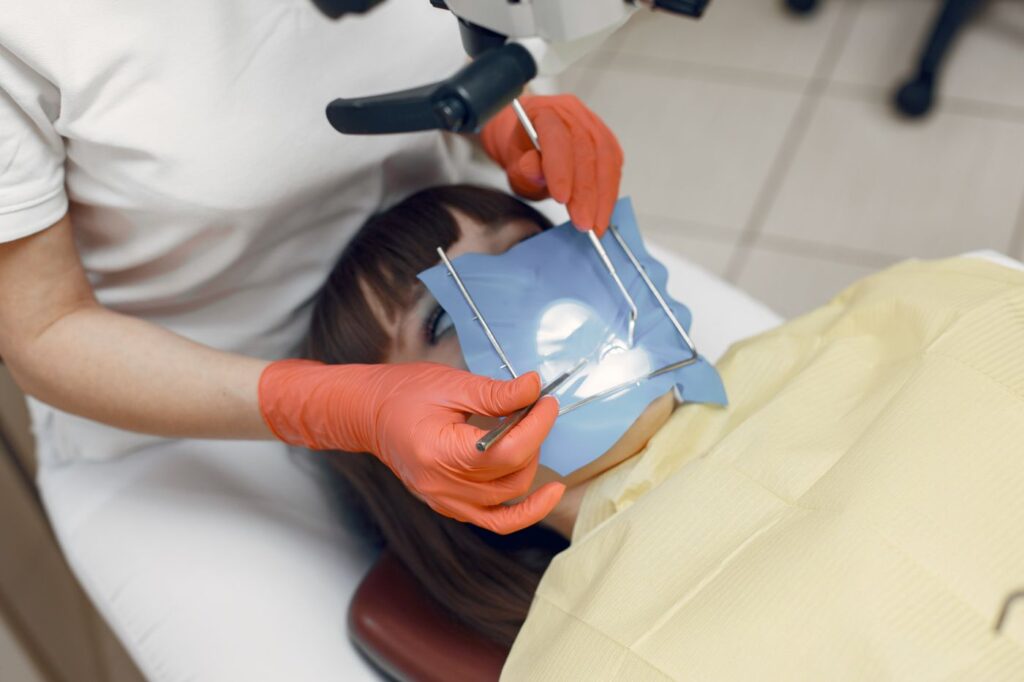
It starts the same way as any other treatment: local anaesthetic, a rubber dam, and the decay removed completely. The difference comes at the point the pulp is reached.
Instead of proceeding into the roots, the exposed tissue is removed to a defined level and bleeding is controlled under light pressure. That pause is the diagnostic step — what happens in those few minutes decides the rest of the appointment.
If bleeding settles, the material is placed directly against the remaining pulp and sealed, and the tooth is restored in the same visit. Post-operative discomfort is typically milder than after conventional treatment.
What it does not change
The restoration afterwards is as important as it is following a root canal. A well-treated pulp under a leaking filling will fail, because bacteria simply return.
Follow-up matters too. These teeth are reviewed for symptoms and for continued pulp response, and a proportion do go on to need conventional treatment later — which is a manageable outcome rather than a disaster.
Asking about it
It is a reasonable question to raise if you have been told you need a root canal on a tooth that is otherwise in good condition. The answer may well be no — but the reasoning is worth hearing.

What it is not is a way to avoid treatment. A tooth with a dead pulp or an abscess needs conventional root canal treatment, and delaying in the hope of a lesser option makes that worse. The published randomised trial comparing full pulpotomy with root canal therapy is the source for the figures above.
Frequently asked questions
Is this the same as the pulp capping done on children?
The principle is the same — keep living pulp alive — but the evidence in adults is newer. What changed is the materials: hydraulic calcium silicate cements seal and stimulate repair far better than the older options, which is why adult cases now succeed at rates comparable with root canal treatment.
How would I know if I am a candidate?
It is decided at the appointment, not before. The deciding factor is what the pulp looks like once the decay is removed and how it bleeds. If bleeding stops within a few minutes under pressure, the tissue is usually healthy enough.
What happens if it does not work?
You have a conventional root canal, which was the alternative anyway. Failure means treatment moves on rather than the tooth being lost, and that is the reason it is reasonable to attempt.
Is it cheaper?
Usually, yes — published trials report lower cost and shorter treatment time than root canal therapy. It still needs a proper restoration afterwards, which is the larger part of the bill on a back tooth.
Have Questions or Ready to Schedule?
Our team is here to help — call, email, or request an appointment online.