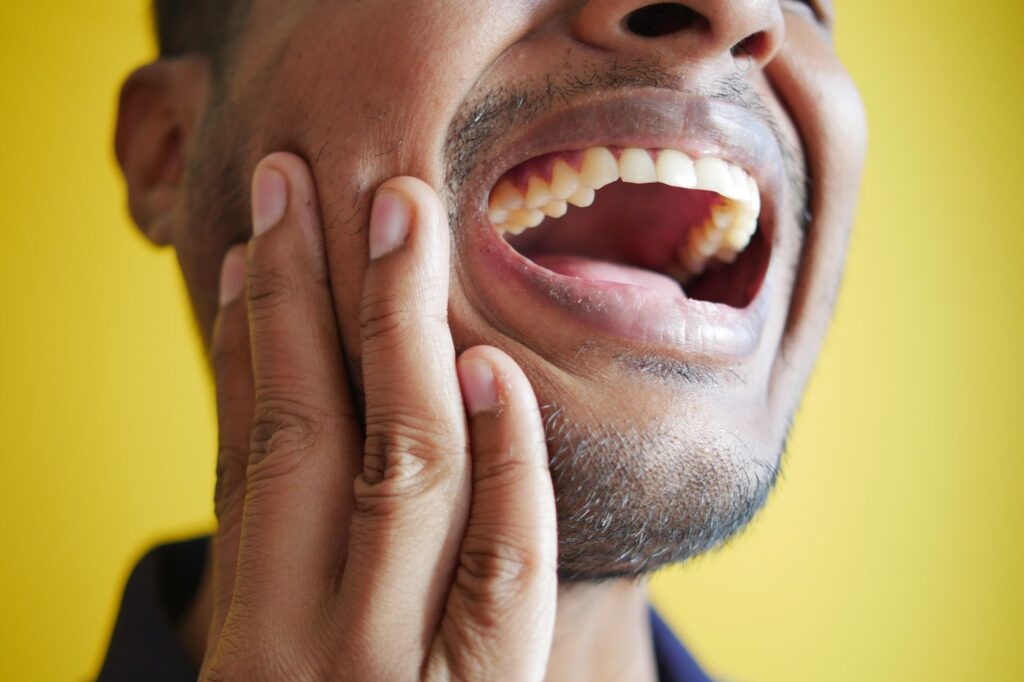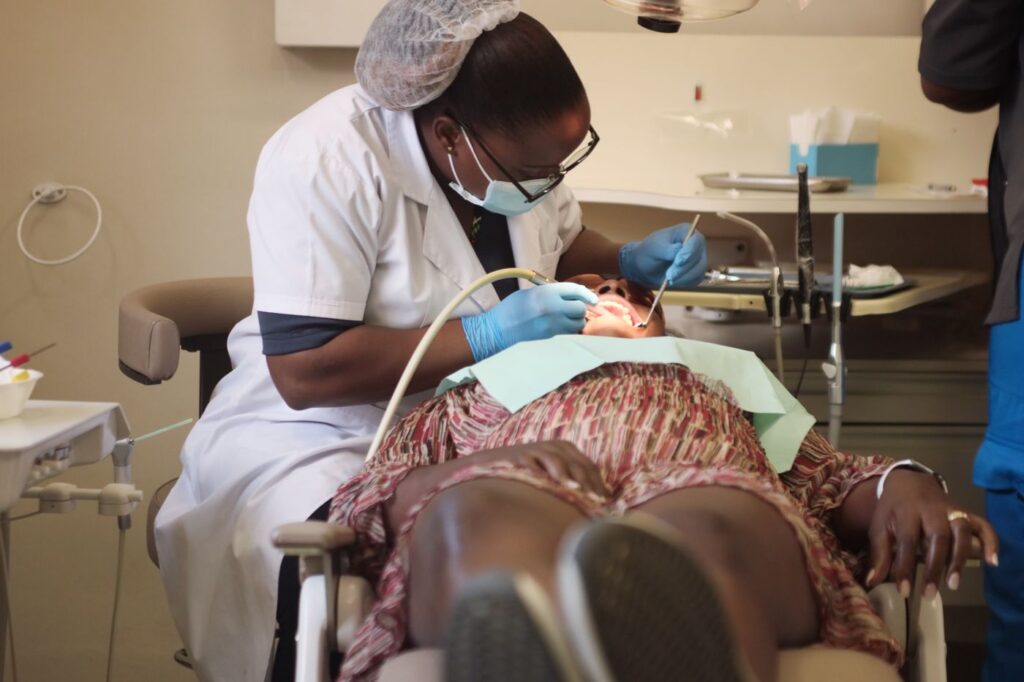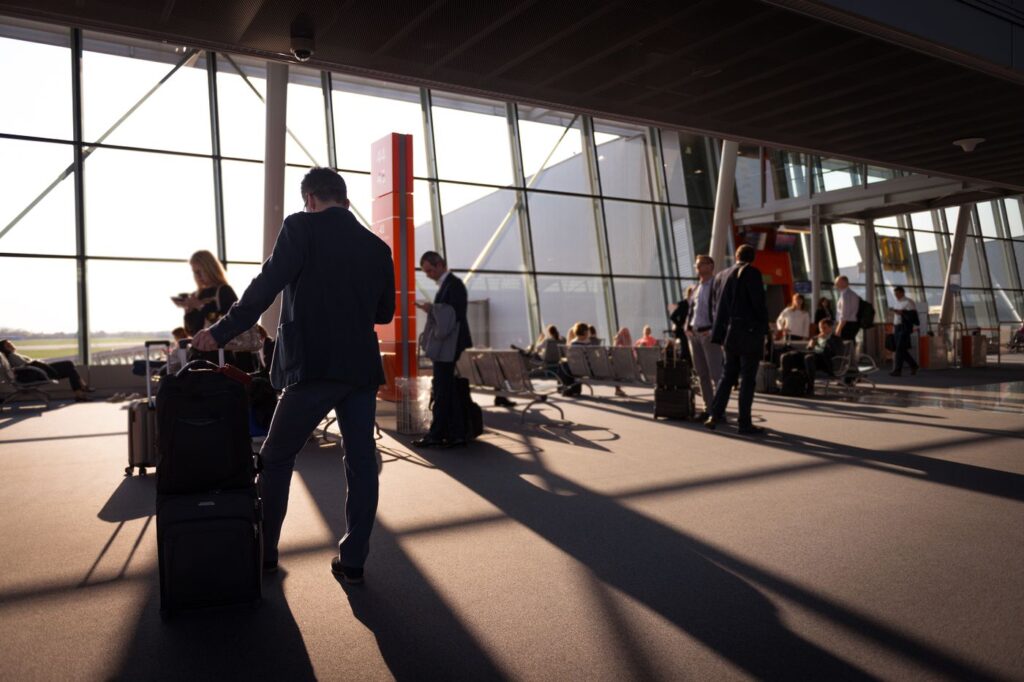
Toothache eight hours from home is a logistics problem before it is a clinical one. What you need is a short list of what can wait, what cannot, and who to call.
Here is how to sort the two, what belongs in your luggage, and how to find competent care in a place you do not know.
Key takeaways
- Swelling, fever or difficulty swallowing needs care that day, wherever you are.
- A lost crown or filling can usually be managed for a few days with pharmacy supplies.
- Most domestic dental plans stop at the border; travel policies typically cover pain relief only.
- A check-up before a long trip is the cheapest insurance available.
Sort it first: wait, or find someone today
The distinction that matters is not how much it hurts. It is whether infection is spreading.

| Situation | What to do |
|---|---|
| Facial swelling, fever, difficulty swallowing or opening | Emergency care that day — do not wait for the flight home |
| Severe pain keeping you awake | Find a dentist locally; this rarely improves on its own |
| Tooth knocked out | Within the hour — keep it moist, do not scrub it |
| Crown or filling lost, no pain | Manageable for days with pharmacy temporary cement |
| Mild sensitivity to hot or cold | Usually holds; sensitive toothpaste and avoid the trigger |
| Chipped tooth, no sharp edge, no pain | Wait until you are home |
Swipe the table sideways to see every column.
The top row is the one people misjudge. Swelling that spreads toward the eye or down the neck is a medical emergency, not a dental inconvenience — the abscess warning signs are the same abroad as at home.
What to pack
A pouch that fits in a wash bag covers the majority of travel dental problems, and everything in it is available before you leave.
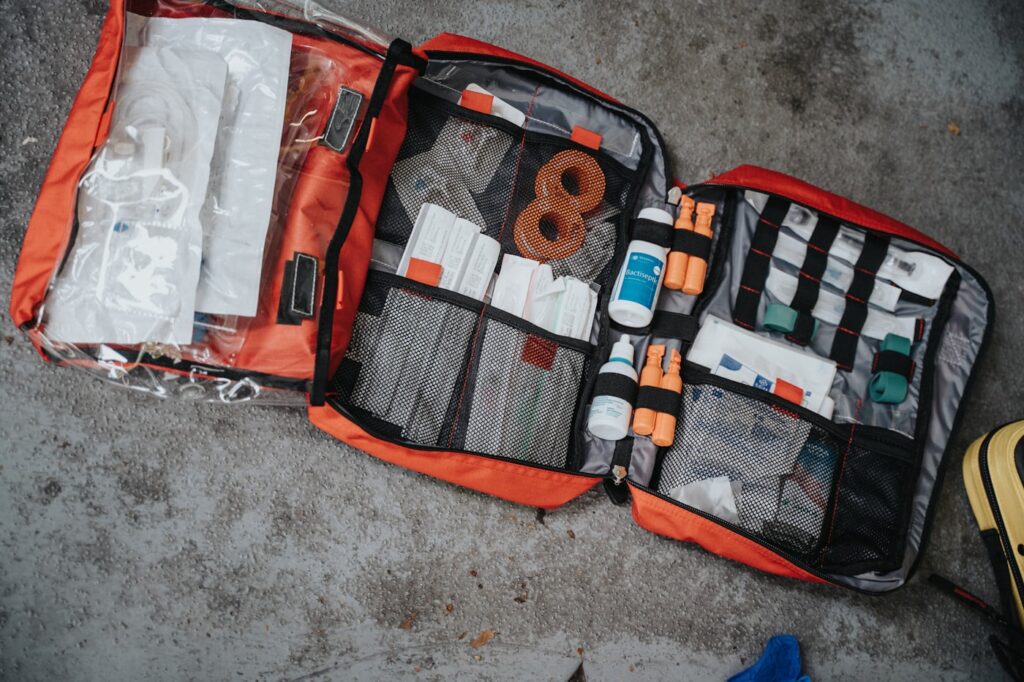
- Temporary filling material or dental cement from a pharmacy — for a lost filling or a crown that has come off.
- Ibuprofen and paracetamol, which work better alternated than either alone.
- Orthodontic wax, which covers a sharp edge and stops it shredding your tongue.
- A small container with a lid — useful if a crown or a tooth comes out.
- Your dentist’s contact details saved offline, not only in an email you need signal to open.
If you already have a temporary restoration in place, take the material rather than hoping. Temporaries are designed to last weeks, and a long trip is exactly when one gives way.
Before you go
If you have a symptom you have been ignoring, deal with it before a long trip rather than after. A tooth that twinges at home reliably becomes the tooth that keeps you awake in a hotel room.
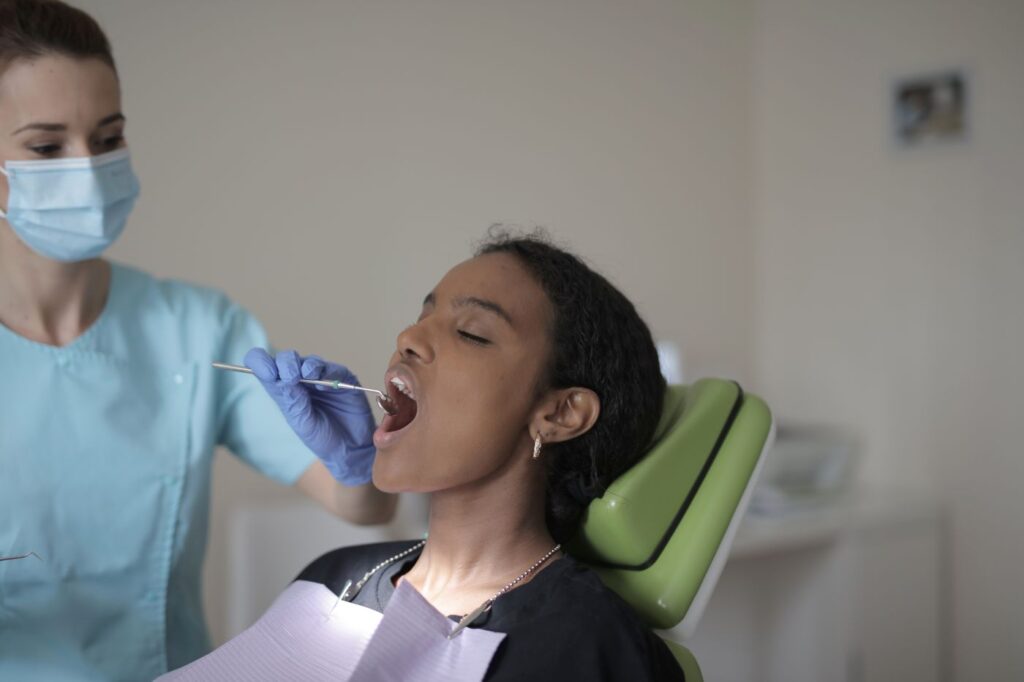
This applies particularly to anything already under way — a temporary crown, an unfinished root canal, a tooth that has been sensitive for weeks. Pain on biting is the classic symptom people postpone, and it does not improve with distance.
Finding a dentist you do not know
Do not simply walk into the nearest practice. Four sources are better than a map search, in roughly this order.
| Source | Useful for |
|---|---|
| Your travel insurer | A vetted clinic, and confirmation of what is covered before you commit |
| Your embassy or consulate | Lists of English-speaking practitioners; the standard first port of call |
| Hotel concierge or reception | Fast local knowledge; they deal with this often |
| A local hospital emergency department | Swelling, fever, or anything systemic |
Swipe the table sideways to see every column.
Ask two questions when you arrive: what exactly are you doing today, and what will it cost. Emergency treatment abroad should stabilise the problem — relieve pain, drain infection, place a temporary. It is rarely the moment for a full course of treatment you cannot follow up.
Ask your own dentist from where you are
This is underused. A clear photograph and a description of the symptoms is often enough for someone who knows your mouth to tell you whether this waits.

They also know what is already going on in that tooth, which a stranger does not. If you have had a root canal recently and the tooth is suddenly painful again, that history changes the assessment considerably — see what a returning symptom usually means.
The insurance trap
Two gaps catch people out. Domestic dental insurance generally does not travel. And travel insurance usually covers emergency pain relief only, with definitions that exclude most actual treatment.
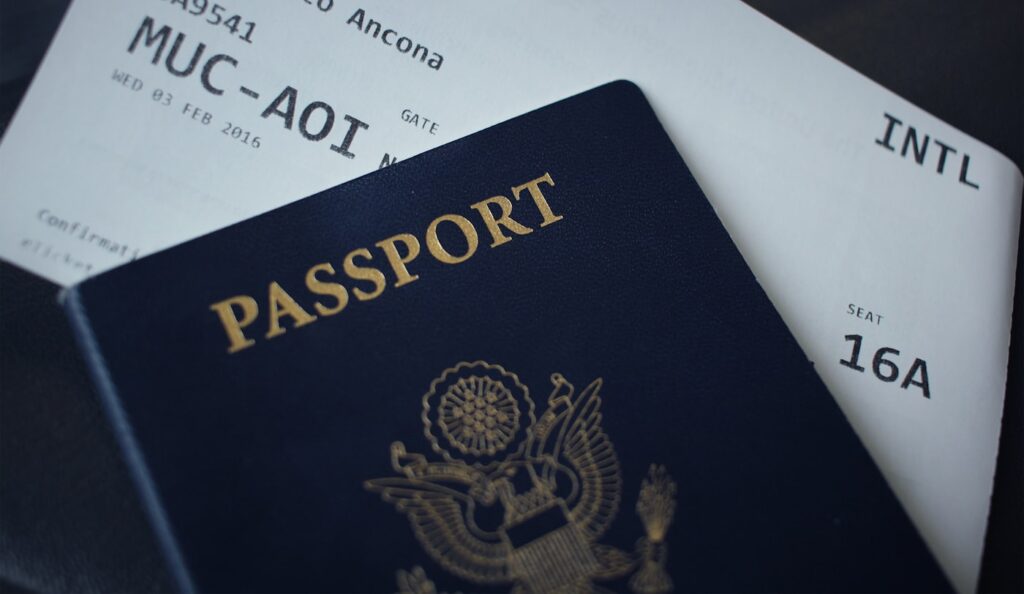
Read the dental section before you leave, keep every receipt and any radiographs, and expect to pay at the time and claim afterwards. Cost and coverage covers how this works at home for comparison.
Managing pain until you are seen
Whatever the plan, you may have hours to get through first. A few things help and one common mistake makes matters worse.
Alternating ibuprofen and paracetamol works better than either at double dose, and staying ahead of the pain is more effective than chasing it. Cold against the cheek helps swelling; heat generally does not, and can encourage an infection to spread.
Do not place aspirin against the gum. It burns the tissue without touching the tooth, and it remains one of the commonest self-treatments we see the aftermath of. If you are already carrying antibiotics from home, do not start them on your own judgement — they treat spreading infection, not toothache, and taking a partial course makes the eventual treatment harder.
When you get back
Have anything done abroad checked. A temporary placed in another country is still a temporary, and it needs replacing on the same timescale as one placed down the road.
Bring whatever paperwork and images you were given. The American Association of Endodontists’ guide to dental symptoms and what they signal is a reasonable reference for judging severity while you are away.
Frequently asked questions
Does my dental insurance cover me abroad?
Usually not. Most domestic dental plans stop at the border, and most travel insurance covers emergency pain relief only — not crowns, root canals or anything described as routine. Check the wording before you go rather than at the counter.
Can a root canal wait until I get home?
Sometimes, if you are days rather than weeks from returning and there is no swelling. Swelling, fever or spreading pain never waits. If in doubt, send your own dentist a photograph and describe the symptoms.
Is dental care abroad safe?
Standards vary by country and by practice rather than by continent. Ask about sterilisation, use single-use items where offered, and prefer a clinic recommended by your insurer, consulate or hotel over one found by walking past it.
What if a crown comes off while I am away?
Keep it. Do not glue it back with household adhesive. A pharmacy temporary cement will usually hold it for a few days, and your own dentist can re-cement it properly on your return.
Have Questions or Ready to Schedule?
Our team is here to help — call, email, or request an appointment online.