People in their seventies and eighties routinely ask whether a root canal is worth it at their age. The evidence answers that clearly: age does not affect whether treatment works.
What does change is how the tooth behaves and what else is going on medically. Here is what genuinely differs about endodontic treatment later in life.
Key takeaways
- Across two dozen studies, age is not a prognostic factor for root canal outcome.
- Canals narrow throughout life, which makes treatment technically harder rather than less successful.
- Medications matter far more than age in planning treatment.
- Dry mouth from medication is the commonest driver of new decay later in life.
What actually changes with age
Teeth lay down dentine continuously. Every year the pulp chamber gets a little smaller and the canals a little narrower, and by seventy a canal that was straightforward at twenty can be extremely fine.
The pulp itself changes too: more fibrous tissue, less blood supply, fewer nerve fibres. That has a practical consequence — an older tooth often responds more weakly to cold testing, and a reduced response is not necessarily a dead pulp. It has to be read against the neighbouring teeth rather than in isolation.
Why calcified canals are harder, not hopeless
A calcified canal is not blocked. It is narrow, and the entrance is often hidden under a layer of dentine laid down over decades.

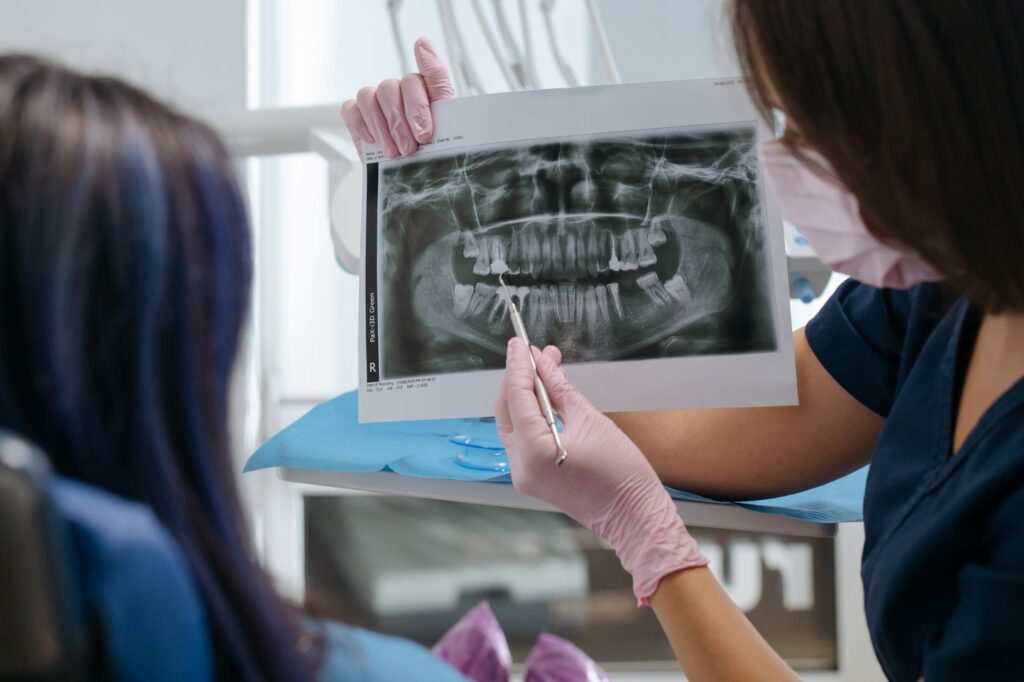
Locating it is a magnification and imaging problem more than a mechanical one. Under a microscope the subtle colour change marking a canal entrance is visible; without one it frequently is not. 3D imaging shows whether a canal exists and where it runs before any drilling starts, which matters when the alternative is exploring blind.
Appointments take longer as a result. That is worth knowing in advance rather than being surprised by it, and it is one of the clearer reasons a general dentist may prefer to refer a heavily calcified tooth rather than attempt it — see what usually prompts a referral. The tooth is not more likely to fail; it simply needs equipment and time that a routine appointment does not allow for.
What matters more than age
| Factor | Why it matters | What we do |
|---|---|---|
| Anticoagulants | Bleeding during surgical procedures | Usually continued; coordinated with your physician |
| Bisphosphonates or denosumab | Affect bone healing after extraction | Often makes saving the tooth preferable to removing it |
| Dry mouth from medication | Sharply raises decay risk | Prevention advice, and expect more frequent review |
| Diabetes | Slower periapical healing | Longer follow-up before judging success |
| Difficulty lying back | Comfort and breathing | Shorter appointments, adjusted chair position |
| Limited mouth opening | Access to back teeth | Planned in advance rather than discovered |
Swipe the table sideways to see every column.

The bisphosphonate row is the one people underestimate. If you take or have taken these drugs, extraction carries a small but real risk to the jawbone — which shifts the balance firmly toward keeping the tooth. That reverses the usual assumption that pulling is the simpler option.
Comfort during a longer appointment
If the technical work takes longer, the practical question becomes whether you can comfortably stay in the chair for it. That is worth raising at the consultation rather than enduring on the day.
Difficulty lying flat is the commonest issue, whether from breathing, reflux or a bad back. The chair position can be adjusted, and treatment can be divided across two shorter visits instead of one long one. Neither compromises the result.
Anaesthetic works no differently with age, though it can take slightly longer to wear off. If you take medication for blood pressure or heart rhythm, tell us — it occasionally changes which anaesthetic we choose, and it is easier to plan for than to discover. Sedation options remain available and are assessed against your medical history rather than ruled out by age.
Decades of previous dentistry
Older teeth rarely arrive untouched. Crowns, posts, large fillings and previous root canals all change the approach.
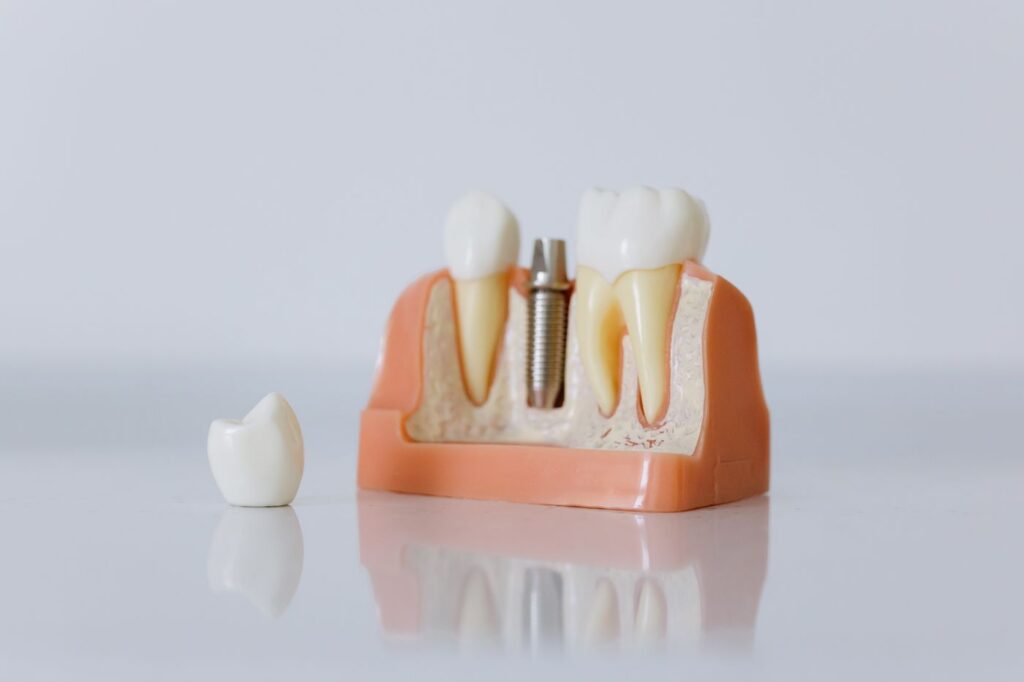
Reaching the pulp through an existing crown means cutting through it, and the crown may or may not survive. Where a post is present, removing it carries a risk of fracturing the root — which is one of the situations where root-end surgery is preferred over conventional retreatment.
Dry mouth, and why it causes so much trouble
Hundreds of common medications reduce saliva — blood pressure drugs, antidepressants, antihistamines, diuretics. Saliva buffers acid, washes away debris and carries minerals that repair early damage, so losing it changes the mouth substantially.

The characteristic result is decay at the gumline and around the edges of old restorations, in people who went decades without a cavity. It is worth raising with whoever prescribes the medication and worth managing actively, because it is the commonest route to needing a root canal at seventy.
Is it worth treating?
This is the question behind the question, and it deserves a direct answer. Success rates are the same; a treated tooth lasts as long as any other; and the alternatives have their own costs.

Extraction means either a gap that affects chewing, or a replacement. Implants take months and need adequate bone; dentures change what you can eat. The alternatives compared covers the trade-offs, and the calculation frequently favours keeping the tooth more strongly at seventy than at forty.
| Consideration | Root canal and crown | Extraction and implant |
|---|---|---|
| Time to a finished result | Weeks | Several months |
| Number of appointments | Typically two to three | Considerably more |
| Depends on bone volume | No | Yes — may need grafting first |
| Affected by bisphosphonate history | No | Yes, and significantly |
| Surgical procedure required | Usually none | Yes |
| Keeps the natural root and ligament | Yes | No |
Swipe the table sideways to see every column.
The time column is the one that decides it for many people. Months of a gap, a temporary and repeated visits is a real cost when the alternative finishes in a fortnight.
Published work on endodontic considerations in older patients covers the clinical detail behind this.
Frequently asked questions
Am I too old for a root canal?
No. Across two dozen studies, patient age does not affect the outcome of root canal treatment. The technical demands can be higher, but the results are not worse.
Why does my dentist say the canals are calcified?
Because they narrow throughout life. Teeth lay down dentine continuously, so a canal that was wide at twenty can be very fine at seventy. It makes the tooth harder to treat, not impossible.
I take several medications. Does that matter?
It matters more than your age does. Anticoagulants, bisphosphonates and drugs causing dry mouth all affect planning, so bring a current list to the appointment.
Is extraction simpler at my age?
Not necessarily. Older bone is denser and roots can be more brittle, so extraction is not automatically the easier option — and replacing the tooth afterwards has its own considerations.
Have Questions or Ready to Schedule?
Our team is here to help — call, email, or request an appointment online.