
Search “are root canals safe” and you will find pages claiming they cause cancer, heart disease and chronic fatigue. Those claims share a single origin, and it is worth knowing what it is.
This is where the idea came from, why it did not survive scrutiny, and what the evidence actually supports — including the risks that are real.
Key takeaways
- The “root canals cause disease” claim traces to one researcher’s work in the 1920s.
- Those experiments had no controls and have never been reproduced.
- No controlled study since has found a link to systemic disease.
- Extracting a restorable tooth is not the safer option — it carries its own risks.
Where the claim comes from
In the 1910s and 1920s, “focal infection theory” held that a hidden infection anywhere in the body could cause disease elsewhere in it. The idea was taken seriously at the time and used to justify removing tonsils, and healthy teeth, on a very large scale across Europe and the United States.

Weston Price extracted root-canal-treated teeth from chronically ill patients and implanted them under the skin of rabbits. When the rabbits sickened, he concluded the teeth had caused the patients’ illnesses.
Why that research does not hold up
Judged by any modern standard, the work fails on basics:
- No control group. Healthy extracted teeth were not implanted for comparison.
- No sterile technique. Teeth were contaminated during extraction and handling, so whatever the rabbits reacted to may never have been in the tooth.
- Enormous relative dose. A whole human tooth under a rabbit’s skin is not comparable to a treated tooth in a human jaw.
- Correlation read as causation. Chronically ill people in that era had more dental disease for reasons unrelated to root canals.
- Never reproduced. A century of attempts has not replicated the findings.
| Claim | Origin | What research since has found |
|---|---|---|
| Root canals cause cancer | Focal infection theory, 1920s | No association found in controlled studies |
| Treated teeth harbour dangerous bacteria | Price’s rabbit experiments | Bacteria exist in many body sites without causing systemic disease |
| Extraction is the safer option | Follows from the above | Extraction has its own surgical risks and consequences |
| Dentists suppress this | Documentary claims, 2019 | The theory was abandoned because it failed testing, publicly |
Swipe the table sideways to see every column.
What the modern evidence says
Focal infection theory was not suppressed — it was investigated and abandoned as better methods emerged. Antibiotics, controlled trials and modern immunology all arrived after Price’s work and none supported it.
The professional consensus is unambiguous: there is no valid evidence linking endodontically treated teeth to systemic disease. Our page on root canal safety and the common myths cover the same ground from the clinical side.
The risks that are real
Being straight about this matters more than reassurance. Genuine risks exist, and they are ordinary clinical ones:
- Treatment can fail. Around 86% of initial treatments succeed, so roughly one in seven needs something further — see retreatment and surgery.
- The tooth can fracture if it is not properly restored, which is why a crown matters on back teeth.
- Post-operative discomfort for a few days is normal and expected.
- Rarely, an instrument separates in a canal, or an existing crack is discovered mid-treatment that changes the prognosis.
How to weigh a health claim you find online
This topic is a useful test case, because the same pattern recurs across health misinformation generally.
- Check the date of the underlying research, not the date of the article quoting it. A 2019 documentary citing 1920s experiments is still 1920s evidence.
- Ask whether it was reproduced. A single striking result nobody has replicated in a century is a red flag, not a suppressed truth.
- Look for the control group. Without one, a study cannot separate the effect being claimed from everything else going on.
- Notice what is being sold. Claims that root canals are toxic frequently arrive alongside an offer to extract teeth and replace them.
None of that requires a clinical background. It is the same reasoning you would apply to any other claim about your health.
What about the X-rays?
Endodontic diagnosis needs imaging, and people reasonably ask about the dose. It is small — a fraction of the background radiation you absorb from the environment in a normal year.
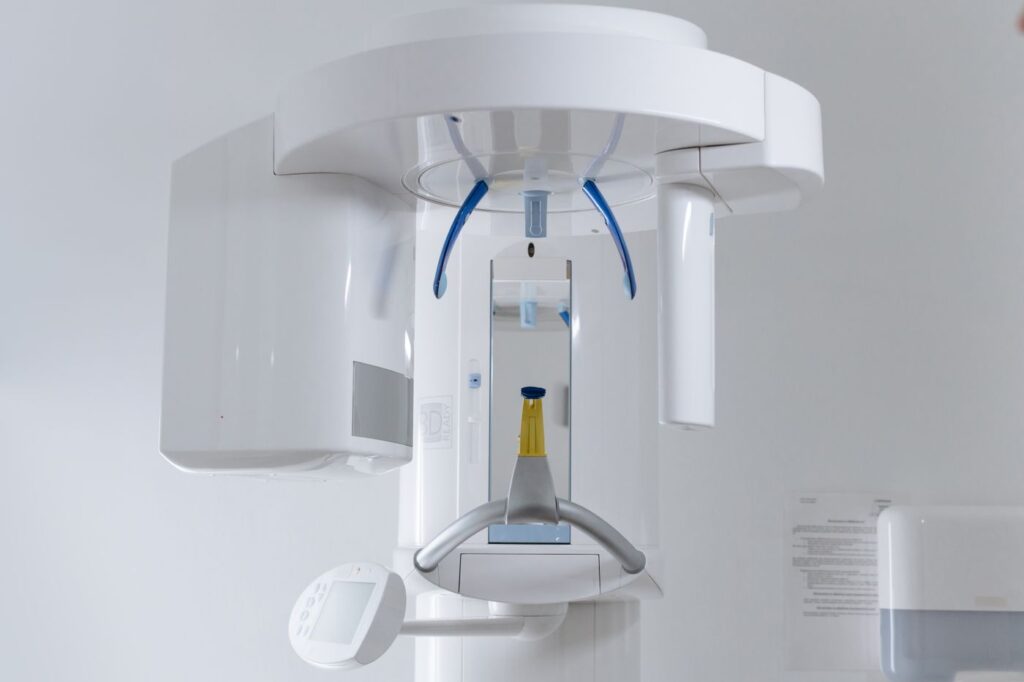
The alternative is worse. Treating a molar without seeing its root anatomy is how canals get missed, and a missed canal is a far more likely source of harm than the exposure.
Treating versus extracting, on risk
| Consideration | Root canal treatment | Extraction |
|---|---|---|
| Procedure type | Non-surgical in almost all cases | Surgical, with bleeding and healing |
| Bone preserved | Yes — the root maintains it | No — resorption begins immediately |
| Adjacent teeth affected | No | Drift and over-eruption over years |
| Further treatment likely | Crown; occasionally retreatment | Implant or bridge to fill the gap |
| If it fails | Retreatment or surgery available | Nothing to retreat — the tooth is gone |
Swipe the table sideways to see every column.
The comparison that actually matters
“Is a root canal safe?” is the wrong question on its own. The real question is whether it is safer than the alternative for your tooth, and for a restorable tooth the answer is consistently yes.

Extraction is surgery. It leaves a gap that drives bone loss and tooth movement unless replaced, and replacement means an implant or bridge with their own risks — compared here on ten-year cost and outcome.

If something you have read worries you, raise it at your consultation — see what a first visit involves. The American Association of Endodontists publishes its position on focal infection theory with the underlying references.
Frequently asked questions
Do root canals cause cancer or chronic disease?
No. That claim comes from research done in the 1920s using methods that would not pass review today, and it has not been reproduced since. Decades of controlled studies have found no link between endodontically treated teeth and systemic disease.
Where did the “root canals are toxic” idea come from?
From Weston Price, who implanted extracted teeth under the skin of rabbits and concluded that the teeth caused the illnesses that followed. The experiments had no controls, no sterile technique, and predate modern microbiology by decades.
Is it safer to just extract the tooth?
No. Extraction is a surgical procedure with its own risks, and it leaves a gap that has to be managed. Nothing about removing a restorable tooth is inherently safer than treating it.
How much radiation is involved?
Very little. The imaging used for endodontic diagnosis delivers a small fraction of the background radiation you receive from the environment each year, and we use it because treating without seeing the anatomy is the greater risk.
Have Questions or Ready to Schedule?
Our team is here to help — call, email, or request an appointment online.