Almost nobody plans for a root canal, so the first question is usually what it will cost — and most pages answer with a range so wide it is useless.
Here is what actually drives the number: which tooth it is, how many canals it has, whether you need a crown afterwards, and how your plan’s annual maximum falls.
Key takeaways
- Treatment alone typically runs $620–$1,500, rising with the number of canals.
- The crown is a separate $800–$2,000 and is not optional on a back tooth.
- Insurance usually pays 50–80% after the deductible, capped by a $1,000–$1,500 annual maximum.
- Timing treatment across two plan years can materially change what you pay.
What the treatment itself costs
Fees track anatomy. A front tooth generally has a single, straight canal; a molar can have four that curve and branch, needing far more time under magnification.
| Tooth | Canals, typically | Treatment cost | Why it differs |
|---|---|---|---|
| Front tooth (incisor) | 1 | $620–$1,100 | Single straight canal, quickest to treat |
| Canine | 1 | $700–$1,200 | Longest root, but usually straightforward |
| Premolar | 1–2 | $720–$1,300 | Two canals in many cases |
| Molar | 3–4+ | $890–$1,500 | Curved, branching canals; longest appointment |
| Retreatment | Varies | $900–$1,800 | Old filling material must be removed first |
Swipe the table sideways to see every column.
The cost people forget: the crown
A root canal removes tissue from inside the tooth, which leaves it more brittle. On a back tooth that takes heavy chewing load, a full-coverage crown is what stops it splitting.
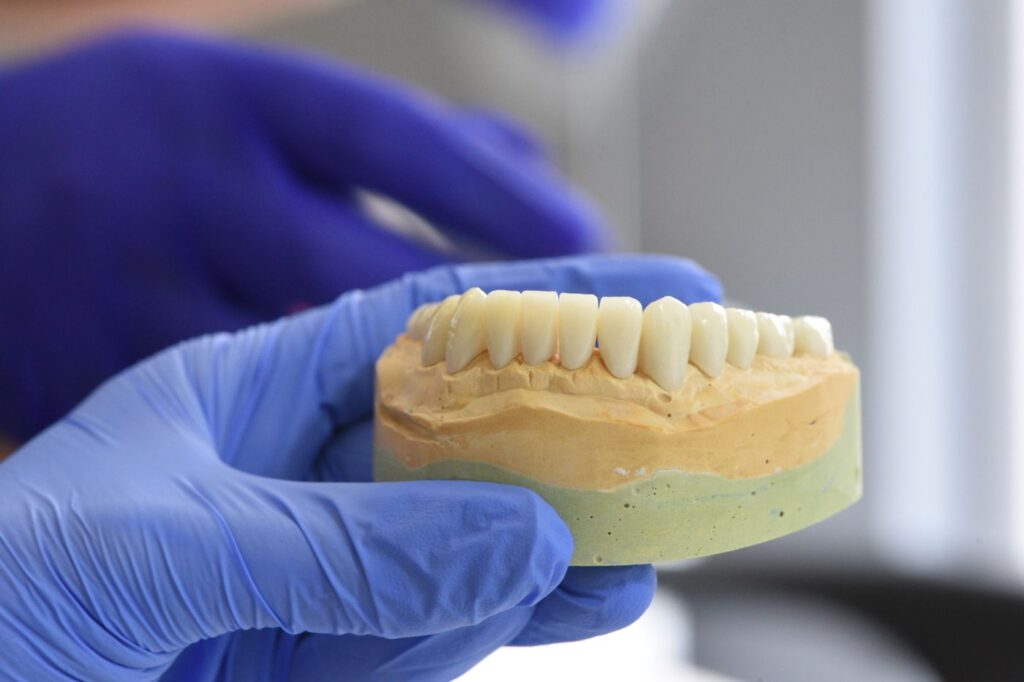
Expect $800–$2,000 for the crown, usually from your general dentist rather than us. Realistically, plan for $1,500–$4,000 all-in per tooth. Our office policy and fees page sets out how we handle estimates and payment.
How insurance actually applies
Most plans file endodontics as a “basic” or “major” service and pay a percentage of an allowed amount — not of our fee. Three numbers decide your share:

- Deductible — usually $50–$100 per person per year, paid before coverage starts.
- Coinsurance — the plan pays 50–80%, you pay the rest.
- Annual maximum — commonly $1,000–$1,500. Once reached, you pay everything else that year.
| Situation | Treatment + crown | Plan pays | You pay |
|---|---|---|---|
| No insurance | $2,400 | $0 | $2,400 |
| 50% coverage, $1,000 max | $2,400 | $1,000 | $1,400 |
| 80% coverage, $1,500 max | $2,400 | $1,500 | $900 |
| 80% coverage, split over two plan years | $2,400 | $1,900 | $500 |
Swipe the table sideways to see every column.

That last row is the practical tip. If treatment falls near your plan’s renewal date, completing the root canal in one year and the crown in the next can use two annual maximums instead of one. See how dental insurance applies to endodontic treatment and our financial policy.
Two other levers are worth knowing about. An HSA or FSA lets you pay with pre-tax money, which effectively discounts the whole bill by your marginal rate. And most practices, including ours, offer third-party financing that spreads the cost interest-free over several months for patients who qualify.
Specialist fees, and why they can cost less
A specialist’s fee can be higher per visit. What it buys is a practice limited entirely to this procedure, with magnification and 3D imaging as standard — see the technology used in our Charleston practice.

The economics only matter if treatment holds. A case that needs retreatment because a canal was missed costs more than the original fee difference several times over. Our page on why an endodontist handles complex cases covers when a referral is worth it.
What is not worth economising on
Two shortcuts reliably cost more later. Skipping the crown on a molar is the first, and it is the more expensive mistake of the two — you risk losing the tooth you have just paid a four-figure sum to keep, and then face the replacement cost on top.

The second is waiting. An infected tooth does not stabilise; it becomes an emergency, and emergency treatment is more expensive and less predictable. If pain is escalating now, read which symptoms need same-day care. If you are weighing extraction instead, the alternatives compared on ten-year cost sets out the maths.
What the fee should include
Compare quotes on what is bundled, not just the headline number. Our fee covers the consultation and diagnosis, the imaging needed to plan the case, the treatment itself, and the follow-up review afterwards.
Some practices price those separately, which makes an initial figure look lower than it turns out to be. Ask specifically whether diagnostic imaging, a second visit if the case needs one, and the review appointment are included.
It is also worth asking your insurer for a pre-treatment estimate. We can submit the proposed treatment codes before anything starts, and the plan responds with what it will actually pay — which removes most of the uncertainty for a fee of this size.
Getting an accurate number for your tooth
Nobody can quote you accurately from a search result, and any page that tries is guessing. The fee depends on which tooth it is, the canal anatomy inside it, whether it has been treated before, and what your particular plan allows.
At a consultation we image the tooth, confirm what it needs, and give you a written estimate with your benefits checked — see what to expect at your first visit. The ADA’s guide to paying for dental care is a useful primer on plan types and the terms above.
Frequently asked questions
Why does a molar root canal cost more than a front tooth?
Front teeth usually have one canal; molars commonly have three or four, sometimes more, and they curve. More canals means more time, more imaging and more instrumentation, so the fee rises with the anatomy rather than the tooth’s importance.
Does dental insurance cover root canal treatment?
Most plans cover 50–80% of the allowed amount once your deductible is met, typically $50–$100 a year. The catch is the annual maximum — usually $1,000–$1,500 — which a root canal plus a crown can exhaust on its own.
Is it cheaper to see a general dentist than an endodontist?
Sometimes per visit, not always overall. A specialist treats difficult anatomy daily and is more likely to finish it in one attempt. A re-do costs more than the difference in fee, and a molar with curved canals is where that shows.
Do I really need the crown as well?
On a back tooth, yes. A treated molar has lost structure and is loaded heavily every time you chew; without full coverage it commonly fractures, and a fractured root cannot be saved. Skipping the crown risks losing the tooth you just paid to keep.
Have Questions or Ready to Schedule?
Our team is here to help — call, email, or request an appointment online.