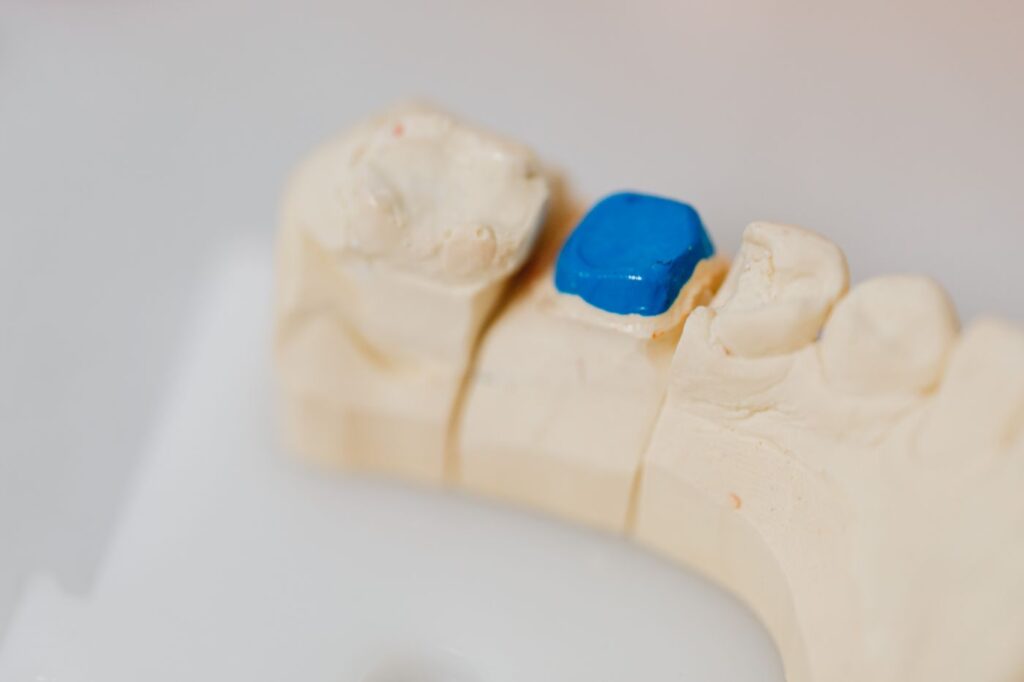
A single grey or brownish tooth among a row of lighter ones is one of the most self-conscious-making things a front tooth can do — and it is usually fixable without a crown.
Here is why treated teeth darken, why ordinary whitening will not touch it, and what actually works.
Key takeaways
- The stain is inside the dentine, not on the surface, so whitening strips cannot reach it.
- Internal bleaching lightens the tooth from within and usually takes one to three applications.
- Reported success is roughly 75–90%, and brown lifts more predictably than grey.
- A crown or veneer is the fallback, not the starting point.
Why a treated tooth changes colour
When a pulp is injured or dies, blood breaks down inside the tooth and its pigments seep into the microscopic tubules that run through dentine. That staining is locked inside the tooth structure.
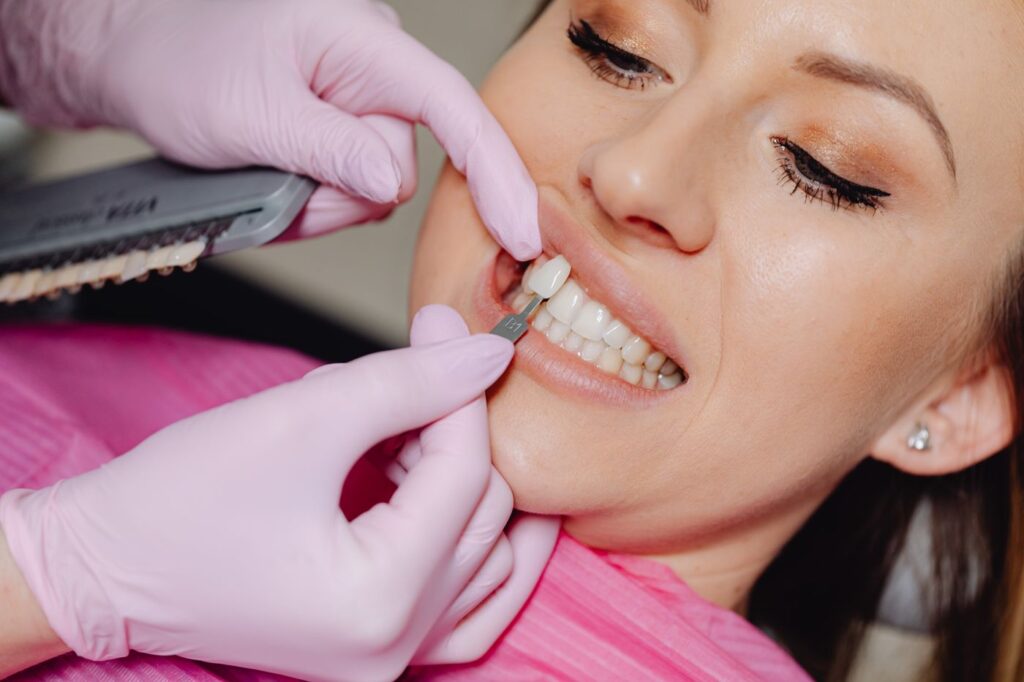
Two other contributors are worth knowing about. Pulp tissue left in the chamber during treatment continues to break down and stain, and some older root canal sealers — particularly grey ones — discolour dentine directly. Modern white and bioceramic sealers are much less prone to it.
| Cause | What it looks like | Responds to internal bleaching? |
|---|---|---|
| Blood breakdown after trauma or pulp death | Grey, sometimes pink initially | Often — grey is less predictable than brown |
| Pulp tissue left in the chamber | Yellow-brown, darkening over months | Usually well |
| Older grey root canal sealer | Dark grey, often near the gumline | Variable; the sealer may need removing first |
| Amalgam staining from an old filling | Blue-grey shadow through the tooth | Poorly — usually needs a restoration |
| Surface staining from food or smoking | Affects all teeth evenly | Not internal — ordinary whitening works |
Swipe the table sideways to see every column.
How long before it shows
Discolouration after trauma is rarely immediate. A tooth knocked at the weekend may look pink within days as blood enters the dentine, then return to normal, then darken gradually over the following months.
After root canal treatment the timeline is slower still. Where residual tissue or a staining sealer is responsible, the change usually becomes noticeable somewhere between six months and a few years afterwards, which is why people often do not connect the two.
Neither timeline changes the treatment. What it does change is the assumption that a tooth which looked fine after treatment must have a different cause — usually it does not.
Why whitening strips make it worse
This is the mistake we see most. Over-the-counter whitening works on the enamel surface, and the surrounding teeth respond well to it.
The treated tooth does not, because its stain is internal. The practical result is a wider gap in shade than you started with, and a tooth that now stands out more.
How internal bleaching works
The technique is straightforward. The access cavity is reopened, root filling material is sealed off with a protective barrier, and a bleaching paste is placed inside the pulp chamber.

A temporary filling seals it, and you leave with it working from the inside — hence “walking bleach”. At the next visit it is removed, the shade assessed, and either repeated or finished with a permanent restoration.
| Option | Tooth structure removed | Typical result |
|---|---|---|
| Internal bleaching | None beyond reopening the access | 75–90% achieve an acceptable match |
| Bleaching plus composite bonding | Minimal | Handles residual shade difference |
| Veneer | A thin layer of the front surface | Predictable colour, but irreversible |
| Full crown | Significant | Reserved for teeth also needing structural coverage |
Swipe the table sideways to see every column.
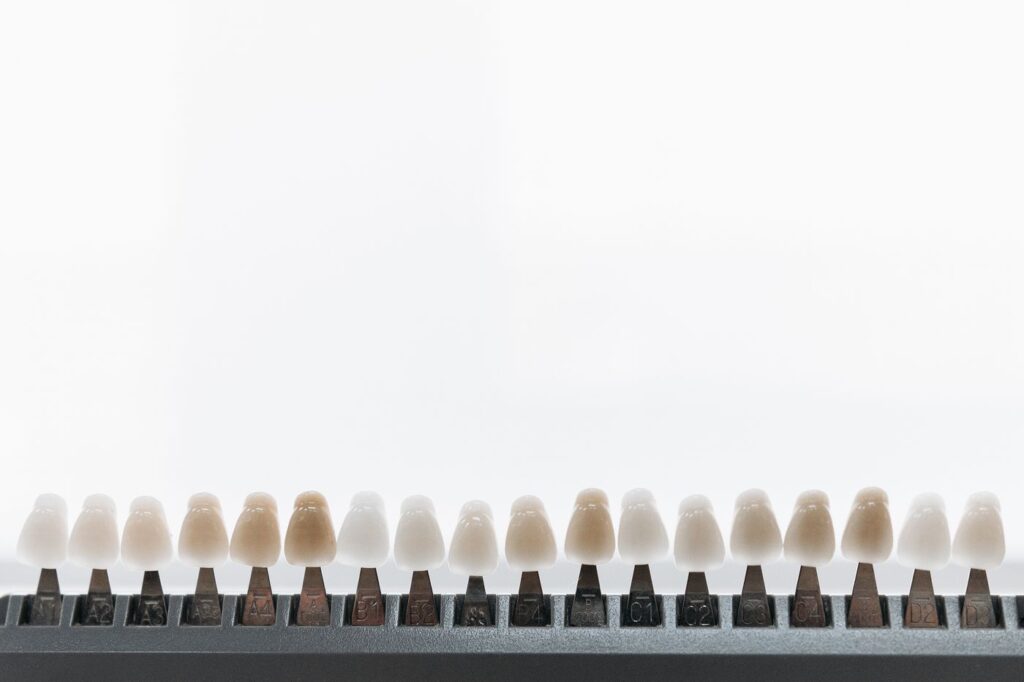
If the tooth already needs a crown for structural reasons, the colour question resolves itself. Where the tooth is otherwise sound, removing healthy enamel purely for shade is a poor trade.
What affects how well it works
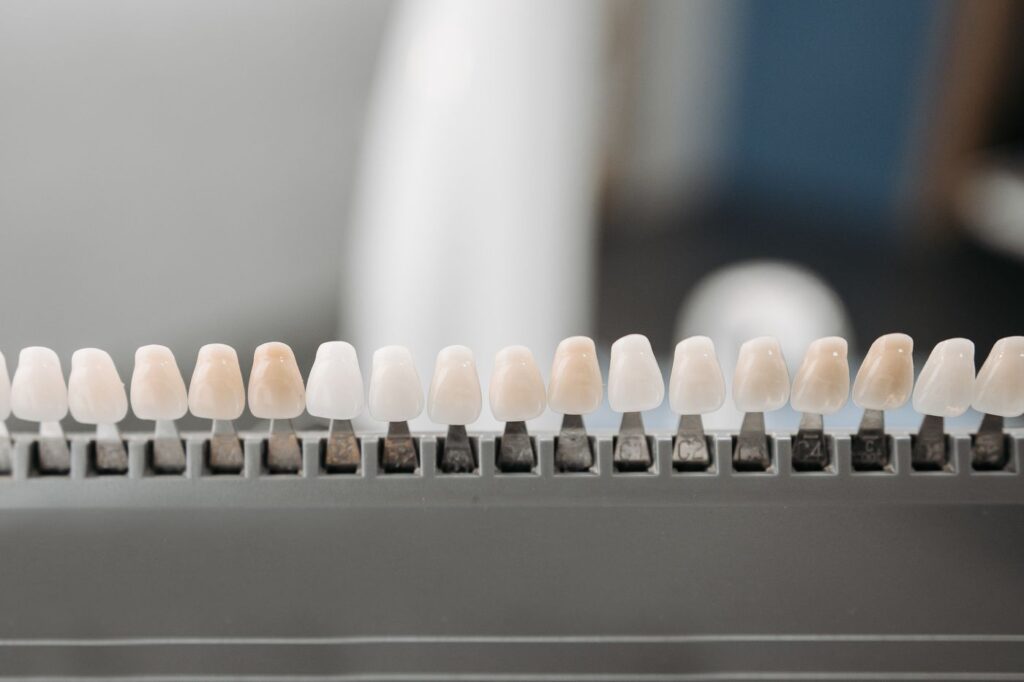
Colour matters. Brown and yellow stains respond well; grey, particularly from long-standing trauma, is less predictable and sometimes needs more applications.

Time matters too. A tooth that darkened last year responds better than one that darkened a decade ago, and the quality of the underlying root canal matters — a leaking or incomplete filling should be addressed first, which may mean retreatment before any bleaching.
What the appointment involves
The first visit is diagnostic rather than cosmetic. We check that the existing root filling is sound, because bleaching a tooth with a leaking canal simply delays a problem you will meet again.
Assuming it is, the access cavity is reopened and a barrier is placed over the root filling. This step matters: it protects the root from the bleaching agent, and skipping it is associated with resorption at the neck of the tooth years later.
The paste goes in, a temporary filling seals it, and you come back in about a week. Most people see a clear change after the first application, and we repeat it until the shade matches or stops improving.
The tooth is then restored permanently. Bonding immediately after bleaching is avoided for a few days, because residual peroxide interferes with how well composite adheres.
When a dark tooth means something else
Discolouration is not always cosmetic. A tooth that darkens without ever having been treated is telling you its pulp has died — often years after a knock that seemed minor at the time.

That tooth needs assessment rather than whitening, because a dead pulp eventually leads to infection at the root tip. If the darkening followed an injury, our guide to what happens after dental trauma explains why the pulp can fail long after the event.
If a front tooth has changed colour, it is worth having it looked at properly before committing to anything irreversible — see what a consultation involves. The NIH’s clinical review of internal tooth whitening covers the technique in detail.
Frequently asked questions
Why does only one tooth go dark?
Because the change comes from inside that particular tooth. Blood breakdown products from the injured or dying pulp seep into the dentine, staining it from within. Neighbouring teeth are unaffected because their pulps are intact.
Will normal whitening strips fix it?
No. External whitening works on the outer surface, and this stain sits inside the dentine. Strips and whitening toothpaste will lighten the surrounding teeth and can make the dark one stand out more.
How long does internal bleaching take?
Usually one to three applications, each left in place for about a week. The bleaching agent is sealed inside the tooth between visits, which is why it is called the walking bleach technique.
Is it permanent?
Often, but not guaranteed. Some teeth relapse slightly over several years and need a top-up application. That is still far less invasive than a crown, which is why bleaching is tried first.
Have Questions or Ready to Schedule?
Our team is here to help — call, email, or request an appointment online.