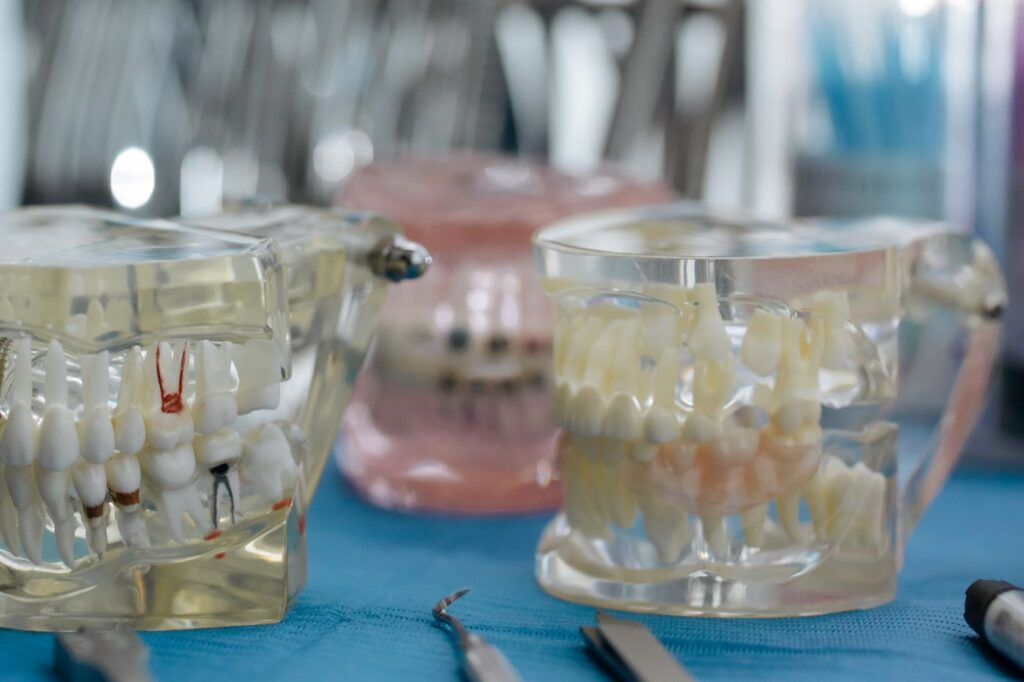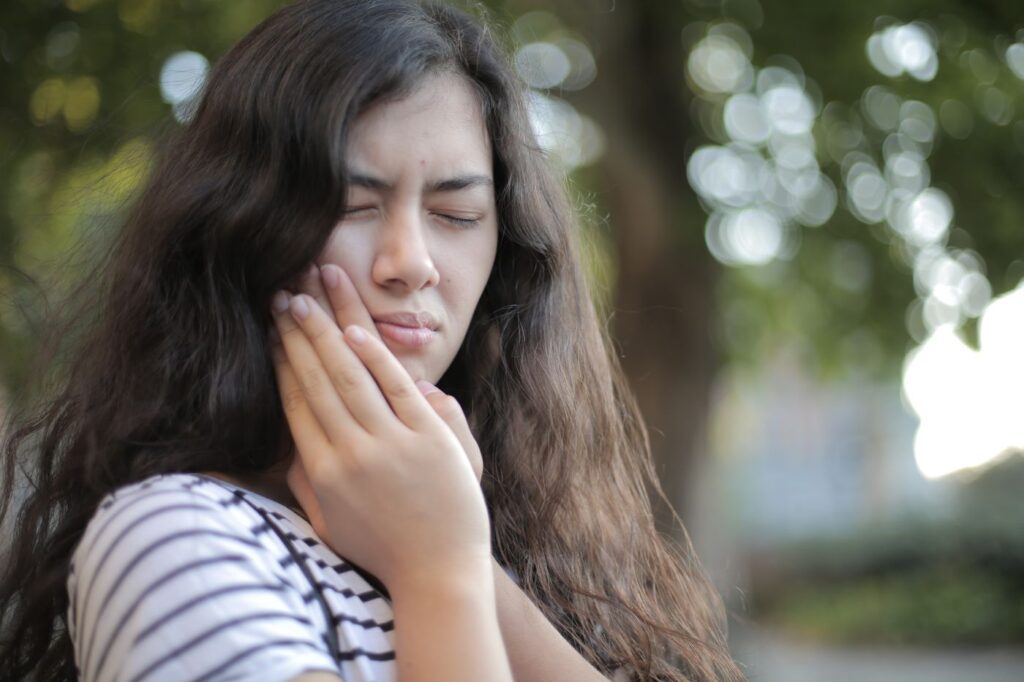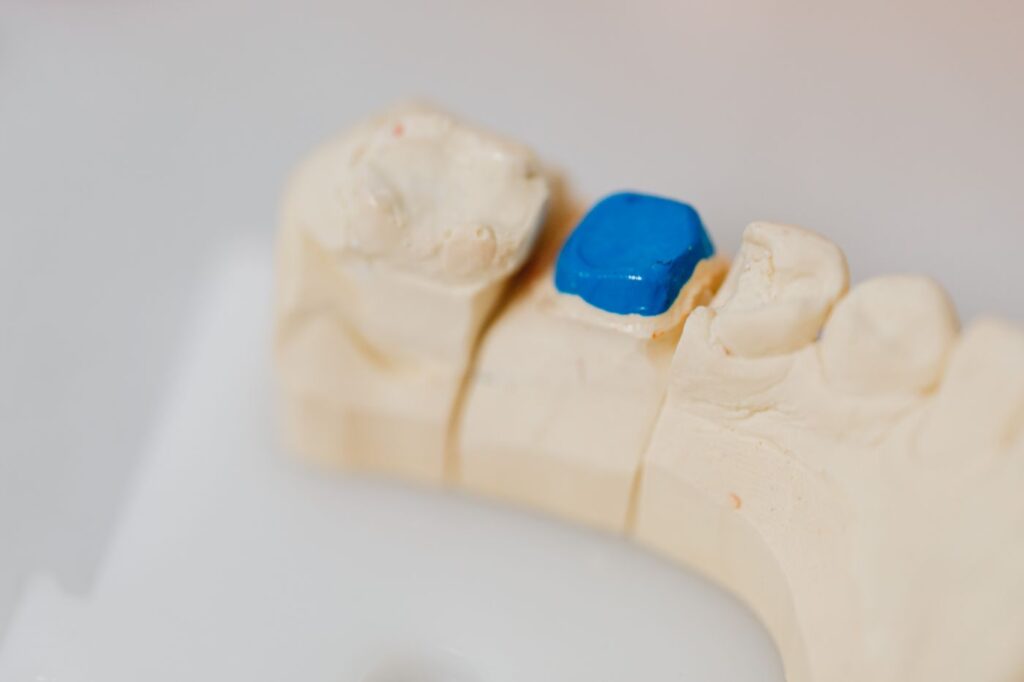
A surprising share of the cracked teeth we treat have no decay, no old filling and no accident behind them. The patient has simply been grinding, night after night, for years.
Bruxism is the most common cause of cracks that arrive with no obvious explanation. Here is how to recognise it, what it actually does to teeth, and what genuinely helps.
Key takeaways
- Grinding applies far greater force than chewing, and sustains it for hours.
- Most of it happens during sleep, which is why people do not know they do it.
- Morning jaw soreness and temple headaches are the earliest reliable signs.
- A guard does not stop grinding — it changes what absorbs the force.
Why grinding cracks teeth and chewing does not
Teeth are built for chewing: short bursts of force, food between the surfaces, and saliva as lubrication. Grinding is none of those things.
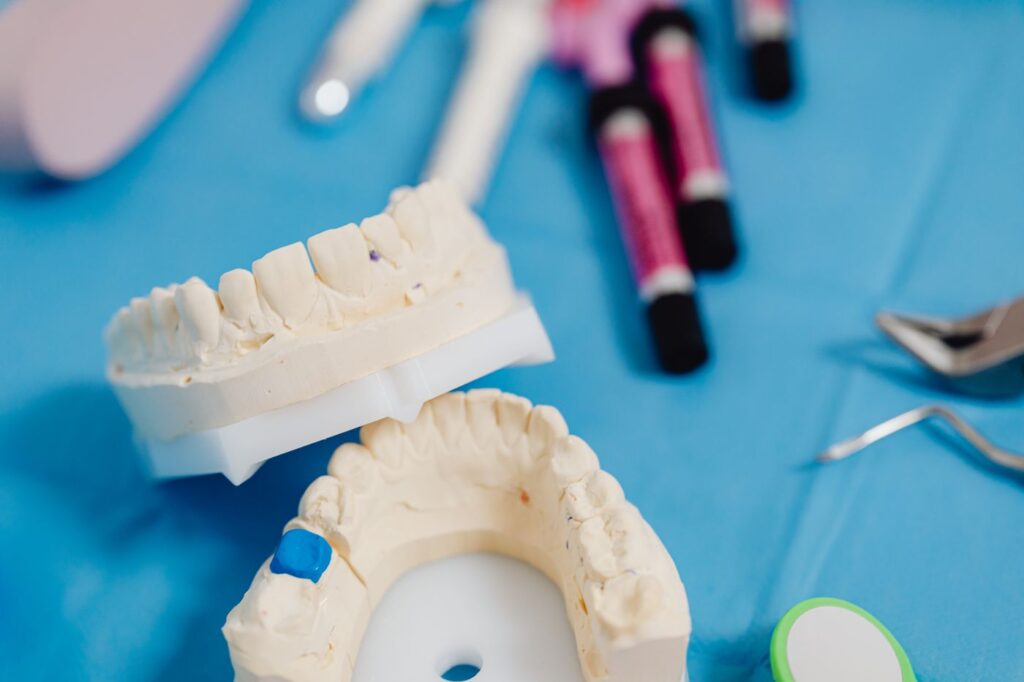
It is tooth against tooth, with nothing in between, at forces well above normal chewing, sustained for long periods while you are asleep and have no protective reflex to stop. The result is fatigue failure — the same way metal eventually cracks under repeated loading rather than one big impact.
The signs, in the order people usually notice them
| Sign | What it indicates | Stage |
|---|---|---|
| Morning jaw soreness or temple headache | Muscle overuse overnight | Early |
| A partner hears grinding | Active sleep bruxism | Early |
| Teeth becoming generally sensitive | Enamel thinning across several teeth | Established |
| Flattened, shorter-looking teeth | Measurable wear | Established |
| Chips or cracks with no obvious cause | Structural failure beginning | Advanced |
| Fillings or crowns repeatedly failing | Restorations taking the load | Advanced |
| Jaw joint clicking, limited opening | Joint and muscle involvement | Advanced |
Swipe the table sideways to see every column.

The pattern that gives it away is symmetry. A single problem tooth is usually a single problem tooth; several teeth sensitive at once, worse in the morning, with aching jaw muscles, points at the muscles rather than at any one tooth — see what different patterns of bite pain mean.

What it does over time
The damage accumulates in a predictable order. Enamel wears first, exposing dentine, which is softer and wears faster — and which transmits temperature to the nerve, producing the generalised sensitivity described in our guide to hot and cold sensitivity.
Then structures start to fail. Cusps crack, restorations debond, and teeth already weakened by large fillings split. Where a crack reaches the pulp, the tooth needs root canal treatment; where it runs below the gumline, it usually cannot be saved at all — which cracks can be saved covers the distinction.
Why it is worth acting early
Wear is cumulative and nothing puts enamel back. A guard fitted while the signs are still soreness and sensitivity protects teeth that are structurally intact; the same guard fitted after two cusps have fractured is protecting teeth that already need crowns.
That difference is measured in thousands of dollars over a decade, which is the practical argument for taking morning jaw ache seriously rather than waiting for something to break.
What actually helps
| Type | Suits | Trade-off |
|---|---|---|
| Soft, over-the-counter | Light grinders, short-term use | Wears through quickly; can increase clenching in some people |
| Hard acrylic, custom-made | Heavy grinders, anyone cracking teeth | Costs more; needs a dental appointment to fit |
| Dual-laminate custom | Most patients | Soft inner surface, hard outer — comfort with durability |
| Anterior-only device | Selected cases with jaw pain or migraine | Prescribed and monitored; not a general-purpose guard |
Swipe the table sideways to see every column.
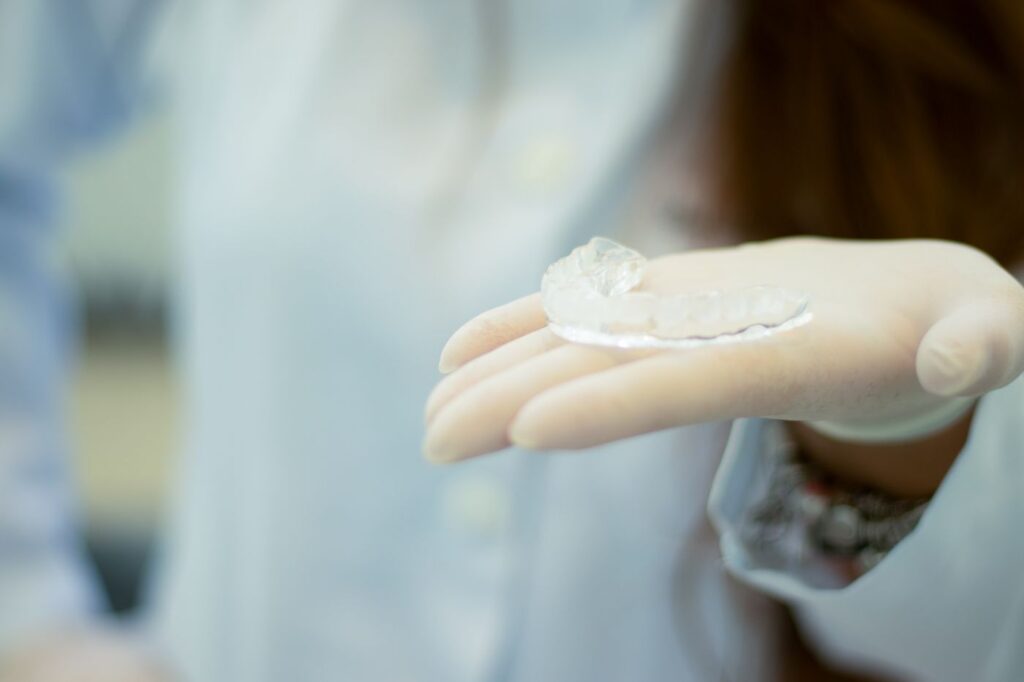
Beyond the guard, the drivers are worth addressing. Stress is the best-established one, and daytime clenching often responds to simple awareness — the resting position of your jaw should have your teeth slightly apart, not touching.

Sleep quality matters too. Poor sleep and sleep-disordered breathing are both associated with bruxism, so persistent grinding alongside snoring or daytime fatigue is worth mentioning to your doctor rather than treating as purely dental.
Daytime clenching is a separate habit
Sleep bruxism and awake clenching are related but not the same thing, and they respond to different approaches.
Awake clenching is postural and typically happens during concentration — driving, screen work, lifting. Because you are conscious, awareness genuinely works: a phone reminder, or a note on the monitor, is often enough to break it within a few weeks.
The check is simple. At rest, your lips should be together and your teeth slightly apart, with the tongue resting on the palate. If your teeth are touching as you read this, that is the habit.
What we look for
Grinding leaves a consistent signature, and it is visible long before anything cracks: flattened cusps that match between upper and lower teeth, polished shiny facets on the biting surfaces, scalloped indentations along the edges of the tongue, and a ridge of thickened tissue along the inside of the cheek at the bite line.
Children grind too, often noisily, and in most cases it resolves on its own as the adult teeth come through — see endodontics in children for when a child’s tooth genuinely needs attention.
If a tooth has already cracked
A guard prevents further damage but reverses nothing. A cracked tooth needs assessing on its own merits, and promptly — cracks propagate under exactly the load that caused them.
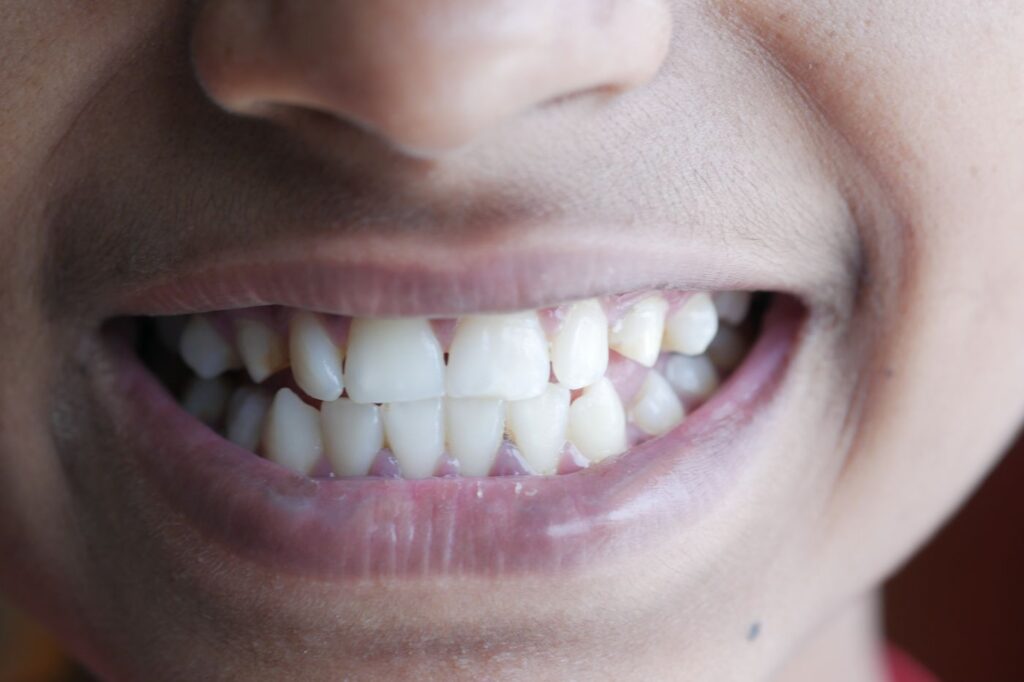
Where the crack has reached the pulp, root canal treatment followed by a crown is the usual route. The crown matters twice over here: it protects the treated tooth, and it protects it against a force that has not gone away.
Our tips for protecting your natural teeth cover guards and prevention, and the cracked teeth page explains what we look for. The NIH’s National Institute of Dental and Craniofacial Research publishes background on jaw and muscle disorders for the joint symptoms that often accompany grinding.
Frequently asked questions
How do I know if I grind my teeth in my sleep?
Usually somebody tells you, or your body does. Waking with a sore jaw or a headache at the temples, teeth that have become sensitive, flattened biting surfaces, or chips appearing with no obvious cause are the common signs.
Does a night guard stop the grinding?
No, and that is worth being clear about. It does not stop the muscle activity; it changes what absorbs the force, so the guard wears down instead of your teeth. That is still the single most useful intervention available.
Is a drugstore guard good enough?
For light grinding, sometimes. For anyone cracking teeth or breaking restorations, a custom guard is worth the difference — it fits the bite precisely, lasts far longer, and a poorly fitting guard can make jaw symptoms worse.
Will treating the grinding fix my cracked tooth?
No. A guard prevents further damage but cannot reverse what has happened. The cracked tooth still needs treating on its own merits — the guard protects it and everything else afterwards.
Have Questions or Ready to Schedule?
Our team is here to help — call, email, or request an appointment online.