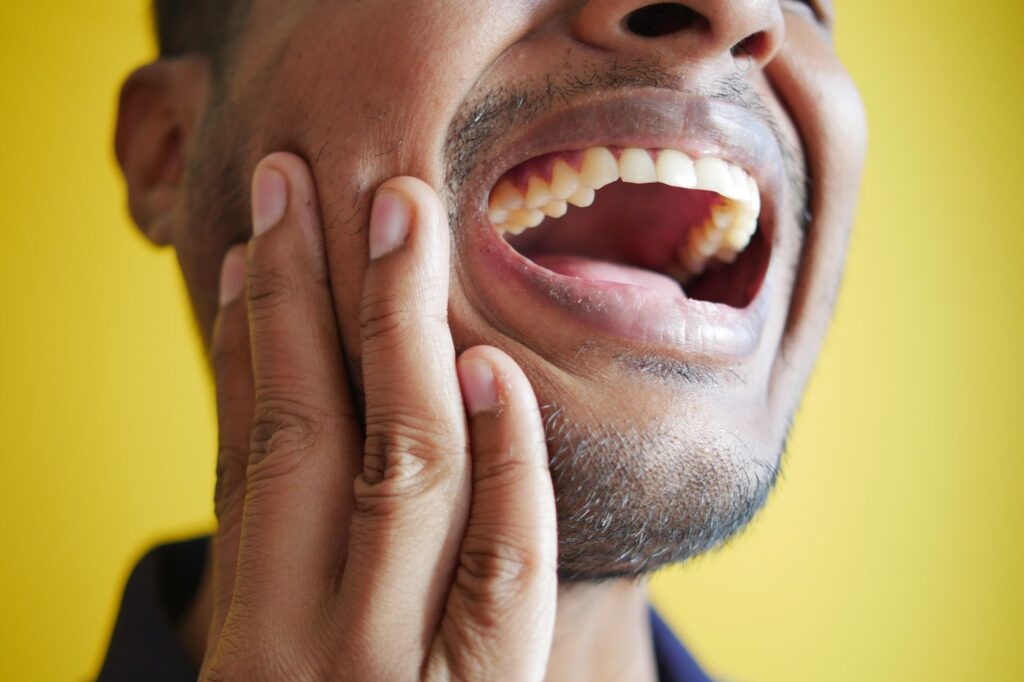
Upper back teeth that ache during a heavy cold are one of the most commonly misdiagnosed complaints in dentistry — in both directions. People have root canals they did not need, and sinus treatment that was never going to work.
The two problems sit millimetres apart anatomically. Here is how to tell them apart, and when it turns out to be both.
Key takeaways
- Upper molar roots sit directly beneath the maxillary sinus, sometimes with paper-thin bone between them.
- Sinus pain typically affects several upper teeth; a tooth problem is nearly always one tooth.
- Pain that worsens when you bend forward points to sinus. Toothache does not care about posture.
- More than 40% of maxillary sinus infections actually start in a tooth.
Why the confusion happens
The maxillary sinuses are air spaces behind your cheekbones. The roots of your upper premolars and molars push up into the floor of those spaces, occasionally protruding through it entirely.
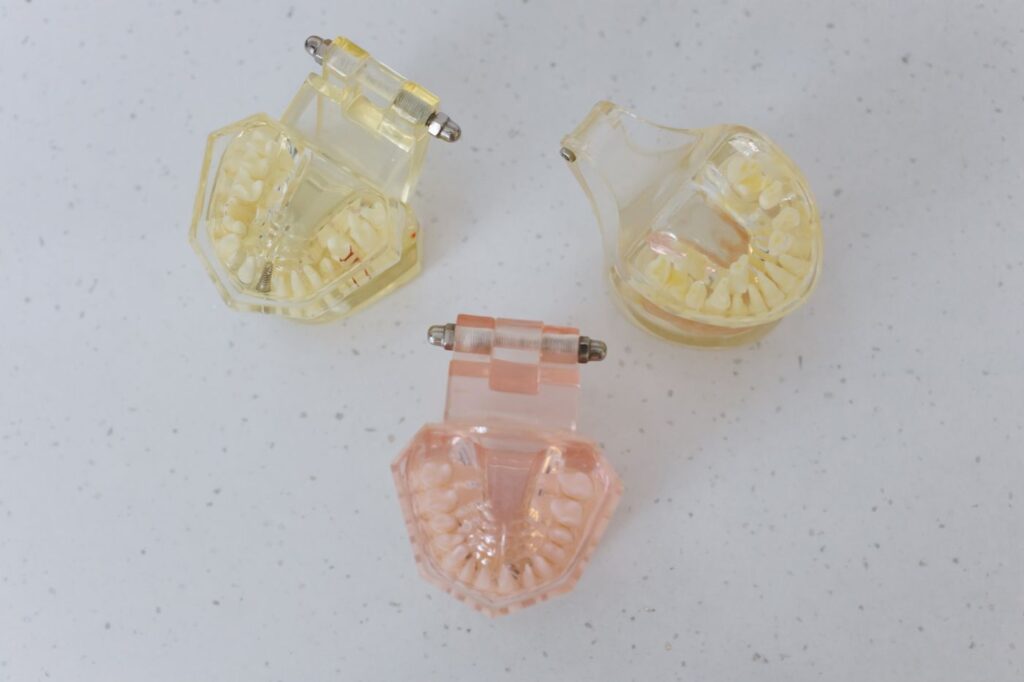
Both are supplied by branches of the same nerve, and the brain is poor at distinguishing where pain within a shared nerve territory originates. That is the whole problem in one sentence.
Six ways to tell them apart
| Feature | Points to sinus | Points to the tooth |
|---|---|---|
| How many teeth | Several upper teeth at once | One tooth, usually identifiable |
| Character | Dull, heavy, pressure-like | Sharp, throbbing, or jabbing |
| Bending forward | Noticeably worse | No change |
| Hot and cold | Little effect | Often the main trigger |
| Biting on it | Usually fine | Frequently painful |
| Other symptoms | Congestion, discharge, reduced smell, facial pressure | None of those |
| Both sides? | Often bilateral | Almost always one side |
Swipe the table sideways to see every column.

The bending-forward test is worth doing deliberately. Lean down as if tying a shoelace and hold it for a few seconds. Sinus pressure builds noticeably; a tooth problem does not change.
The overlap nobody mentions
Real life is less tidy than the table above, and two situations blur it further.
The first is a genuinely coincidental pair. Sinusitis is common and toothache is common, and having both at once is not rare. If sinus treatment resolves the congestion but one tooth still aches, that remaining tooth deserves its own assessment rather than another course of decongestants.
The second is recent dentistry. An upper molar extracted or treated close to the sinus floor can leave a small communication between mouth and sinus, and sinus symptoms that begin within days of such a procedure should go back to whoever performed it.
In both cases the useful instinct is the same: treat the finding you can actually demonstrate, and re-examine rather than assume when symptoms only partly resolve.
When it is genuinely the tooth
Certain features effectively rule sinus out. If cold makes it worse and the pain lingers well after the cold is gone, that is pulpal — our guide to what hot and cold sensitivity means covers how to read it.
Sharp pain on releasing a bite suggests a crack. Pain that wakes you at night, or swelling of any kind, points firmly at the tooth and needs seeing quickly — see which symptoms are urgent.
When the tooth caused the sinusitis
This is the case most often missed. An infected upper molar can discharge directly into the sinus above it, producing genuine sinusitis with a dental cause — maxillary sinusitis of dental origin.

The pattern to watch for is one-sided sinusitis that keeps returning despite antibiotics or nasal treatment, often with an unpleasant taste or smell. Treating the sinus alone never resolves it, because the source is a tooth.
| Your situation | Start with | Why |
|---|---|---|
| Cold or allergy symptoms, several upper teeth ache | Your doctor | Likely sinusitis; teeth are referred pain |
| One tooth, reacts to hot or cold | A dentist or endodontist | Classic pulpal presentation |
| One-sided sinusitis that keeps returning | A dentist first | Suspect a dental origin |
| Recent dental work on that side, now sinus symptoms | The treating dentist | Could be related to the procedure |
| Facial swelling, fever, or the eye area involved | Emergency care today | Spreading infection, whatever the source |
Swipe the table sideways to see every column.
Why guessing is expensive
Both errors happen, and both cost more than the assessment would have.
Treating a healthy tooth for sinus pain is irreversible. Root canal treatment on a tooth whose pulp was never the problem removes healthy tissue and leaves the actual pain untouched, which is how people end up having a second and third tooth treated in search of relief.
The reverse wastes time rather than tooth structure. Weeks of decongestants and antibiotics for what is actually an infected molar allow the infection to progress, and the tooth that could have been treated straightforwardly becomes an abscess with facial swelling.
Neither is a criticism of anyone. The presentations genuinely overlap, which is precisely why testing rather than reasoning settles it.
How the diagnosis is actually made
Testing settles it quickly. Cold testing shows whether the pulp is alive and how it responds; percussion testing shows whether inflammation has reached the ligament around the root.

A live, normally responding pulp on every upper tooth in the area effectively rules out a dental cause. Where the picture is unclear, 3D imaging shows the relationship between root tips and the sinus floor directly — see the imaging we use.
If you are unsure, an assessment is worth having before committing to either treatment path — see what a consultation involves and our guide to locating the source of tooth pain. UCLA Health’s overview of sinus infections disguised as toothache covers the same ground from the medical side.
Frequently asked questions
Can a sinus infection really feel like toothache?
Yes, and convincingly. The roots of your upper molars sit directly beneath the maxillary sinus floor, sometimes separated by less than a millimetre of bone. Inflammation in the sinus presses on the same nerves, and the brain reads it as tooth pain.
How can I tell the difference at home?
Three quick checks: does it affect several upper teeth at once, does it get worse when you bend forward, and do you have nasal congestion? Sinus pain usually says yes to all three. A tooth problem is usually one tooth, position-independent, and triggered by hot or cold.
Can a tooth cause a sinus infection?
It can, and more often than people expect — more than 40% of maxillary sinus infections start as a dental infection. If sinus treatment keeps failing on one side only, an upper molar is worth investigating.
Which should I see first?
If you have clear cold or allergy symptoms and the pain covers several teeth, start with your doctor. If it is one tooth, reacts to temperature, or you have had recent dental work on that side, start with a dentist.
Have Questions or Ready to Schedule?
Our team is here to help — call, email, or request an appointment online.